What a deadbolt does that a knob lock does not
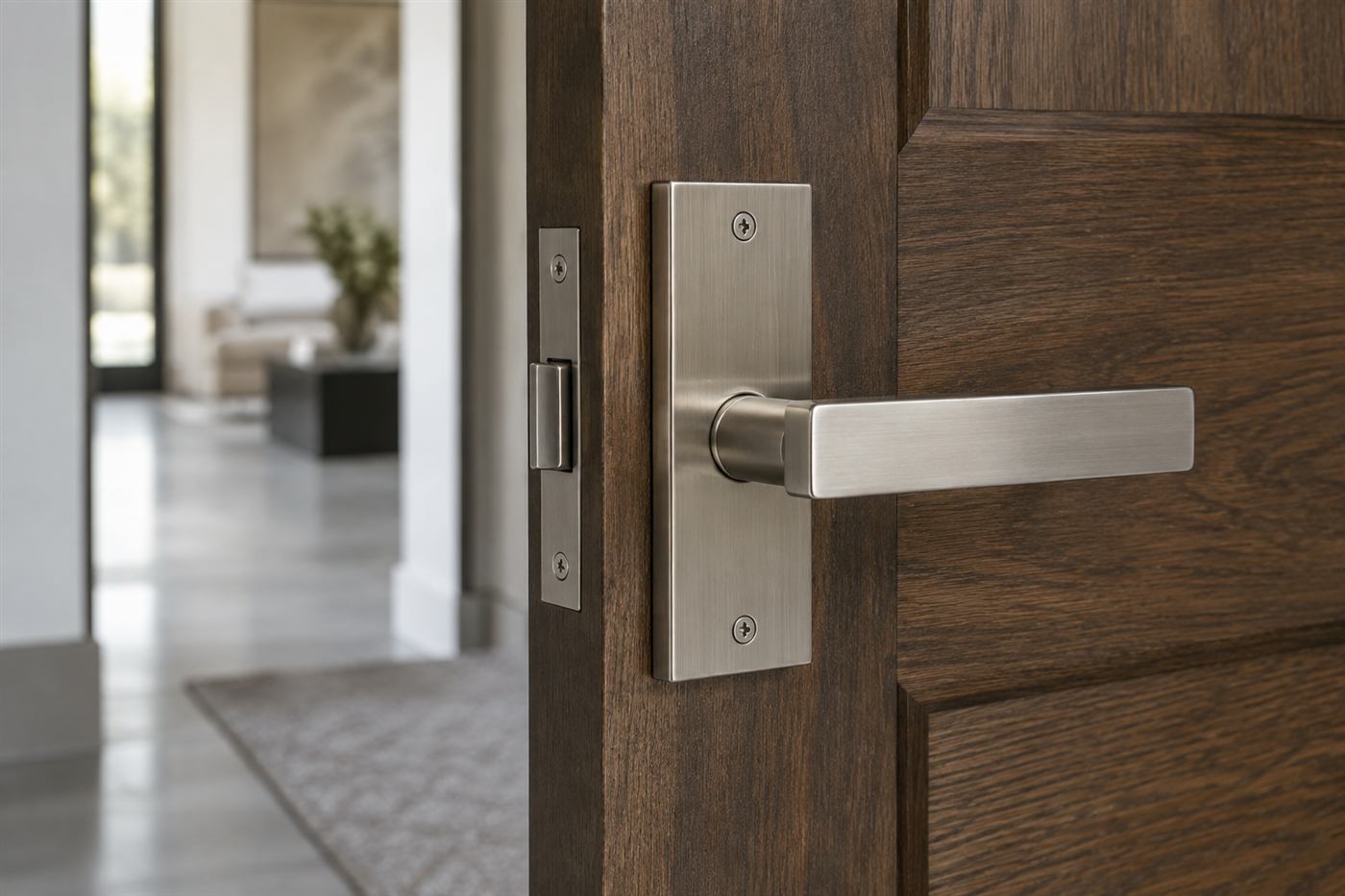
A standard knob or lever lock holds the door closed with a spring latch, which is a beveled piece of metal that slides back when the door shuts and springs out into the frame. That latch is designed for convenience, not strength, and it can often be pushed back with a thin piece of plastic or a hard shove. A deadbolt is different. Its bolt is a solid piece of metal that only moves when the key or thumb turn moves it, and it has no spring and no bevel. When it is thrown, it sits in the frame and holds.
That is why a deadbolt is usually installed in addition to the knob or lever lock on an exterior door. The knob handles daily use and keeps the door shut in wind, and the deadbolt provides the stronger lock at night or when you leave. Some modern designs combine both functions in a single handle set with a separate bolt, and some smart locks include their own deadbolt mechanism. In every case, what matters is how well the bolt engages the frame and how strong the frame is.
Single cylinder, double cylinder and thumb turn
A single cylinder deadbolt has a key slot on the outside and a thumb turn on the inside. This is the most common type, and it lets you lock and unlock quickly from inside without a key. A double cylinder deadbolt has a key slot on both sides. It is sometimes used on doors with glass nearby, where a thumb turn within reach of the glass could let someone break the pane and reach in.
Double cylinder locks come with a real safety concern. In a fire or emergency, a family member who cannot find the key may be trapped. Many building and fire safety rules restrict or prohibit key-operated locks on the inside of exit doors in homes and many occupancies, and the right choice depends on your building and your local rules. A technician can explain what is appropriate for your door, and for most homes a single cylinder with a good thumb turn is the safer arrangement.
- Single cylinder: key outside, thumb turn inside, the usual home choice.
- Double cylinder: key both sides, used only where rules and safety allow.
- Keyless entry deadbolt: keypad outside, thumb turn inside.
- Smart deadbolt: app or keypad control with a backup key.
- Vertical deadbolt: used in some doors where a standard bolt does not suit.
Understanding grades
Deadbolts are rated for strength and durability by a national standards body, and the ratings are commonly called grades. Grade 1 is the highest and is built for heavy use and strong resistance to force. Grade 2 is a solid residential and light commercial level. Grade 3 is basic. The grade covers things like the strength of the bolt, how it resists being forced, and how many times it can be cycled before wearing out.
A higher grade generally means thicker metal, a more robust cylinder and a better build, but grade alone does not make a door secure. A Grade 1 bolt in a weak frame fails at the frame. When you talk to a technician, ask which grade is appropriate for your door, what is installed now, and whether the frame can support the upgrade. For a front door on a home, a good residential-level deadbolt installed correctly into a reinforced frame is a strong improvement over a bare latch.
Throw length and why it matters
Throw is how far the bolt extends from the edge of the door into the frame when locked. A short throw leaves less metal in the frame, so the bolt has less to hold on to. Industry practice favors a throw of about one inch for a good deadbolt on an exterior door, because that depth engages the frame firmly. A bolt that barely clears the door edge can be defeated more easily by force, especially if the gap between the door and the frame is wide.
The gap itself matters as well. If the door fits loosely and the gap is large, a long bolt may still have little engagement, and a technician may recommend adjusting the door or the strike before installing anything. If the door sticks in humid weather and drags, forcing the bolt to line up with a misaligned strike wears the lock. Tell the technician if the door has been sticking, rubbing the frame, or changing with the seasons, because Boca Raton's humidity moves wood doors more than most people expect.
The strike plate and the frame
The strike plate is the metal piece on the frame that the bolt enters. On many homes, the strike is a thin plate held by short screws into soft wood, and that is the weakest link in the system. When a door is kicked, the usual failure is the frame splitting around the strike, not the bolt breaking. A reinforced strike with a deep box and long screws that reach into the stud behind the frame spreads force across more wood.
A technician will check the frame for rot, cracks and old repairs, and will measure how the bolt lines up with the strike. If the wood is soft or damaged, repair or reinforcement may be needed before a new deadbolt is worth fitting. Our page on strike plate reinforcement covers the frame side of the job in more detail. An excellent lock in a weak frame gives a false sense of safety, and honest advice sometimes means fixing the frame first.
Doors that need a new hole
Many exterior doors already have a bore, which is the large round hole for a deadbolt, and a second smaller hole for the bolt that runs through to the edge. If your door has only a knob lock, there is no deadbolt bore, and a technician must drill one. This is done with a hole saw and a template, and it needs to be precise. Mistakes can split the door, especially hollow-core or thin doors, which are not suitable for a deadbolt at all.
Steel doors, fiberglass doors, solid wood doors and impact-rated doors each behave differently when drilled. Some manufacturers specify exactly where a bore may go and may not allow field drilling at all, and a hurricane-impact door might have restrictions. Tell the technician what kind of door you have, and if you know the manufacturer, say so. A door that is too thin, too damaged or not designed for drilling may need replacing, and a good technician will say so plainly instead of risking the door.
| Door type | Deadbolt suitability | Things to check |
|---|---|---|
| Solid wood | Good | Moisture damage and frame condition |
| Steel | Good | Existing bore position and rust at edges |
| Fiberglass | Good with care | Manufacturer drilling rules |
| Impact-rated | Depends on door | Manufacturer limits on modification |
| Hollow-core interior | Not suitable | Too thin for a deadbolt |
Backset, bore size and fitting an existing door
Backset is the distance from the edge of the door to the center of the bore, and the two common sizes are a bit over two inches and a bit over two and three-quarter inches. Most deadbolts can be adjusted to fit either, but it must be set correctly. Bore size is usually a hole of about two and one-eighth inches. If an existing hole is the wrong size or slightly off, the technician can sometimes fix it with a repair plate, but badly damaged bores may need a door repair.
Matching hardware also matters for appearance. If you have a handle set in a certain finish, a deadbolt in the same finish looks better and is easier to match when you rekey or replace later. A technician can bring several finishes. If you want all your exterior doors keyed alike, so that one key opens the front, back and garage entry, mention it at the start. Our guide to keyed-alike locks explains how this works and what to consider.
What the installation visit looks like
A technician will start by looking at the door, the existing hardware and the frame. They will measure the door's thickness, check the backset, and test how the door swings and latches. If the door and frame are sound, they will mark the new bore, drill carefully, fit the bolt and cylinder, and install a strike. They will then test the lock with the door open and closed, and check that the key turns smoothly and the bolt throws fully into the strike.
You will be asked to try the lock yourself. Test it several times, from the outside and the inside. Ask for spare keys if the deadbolt is new, and ask whether the keys are cut to a standard or restricted blank. Ask to be shown how to re-key the lock in future if that is possible, and ask what maintenance the lock needs. In our humid, salty climate, a drop of the right lock lubricant once or twice a year helps the mechanism, and a technician can recommend a type that does not gum up.
- Inspect the door, frame and existing hardware.
- Explain the options and confirm the approach by phone and on site.
- Drill or adjust the bore if needed, with a template.
- Fit the bolt, cylinder and strike, with long screws into the stud.
- Test from both sides and hand over the keys.
Salt air, humidity and hardware finish
Boca Raton homes sit close to salt air, and salt eats finishes. Thinly plated hardware can start to pit and corrode within a short time, especially on doors facing the ocean or the Intracoastal. A good finish, a sealed cylinder and stainless or brass components hold up better. Ask about marine-grade or corrosion-resistant finishes, and keep in mind that no finish is permanent without a little care, including an occasional wipe with a damp cloth to remove salt.
Humidity also affects wooden doors, which swell in summer and shrink in winter. A deadbolt that engages perfectly in dry weather may bind in the wet season. If the bolt struggles to throw after rain, do not force it. Note when it happens, and tell the technician, because a small adjustment to the strike or door can fix the issue without replacing the lock.
Common installation mistakes to avoid
The most common mistake is fitting a good deadbolt into a poor frame. The lock looks impressive, but the strike is held by two short screws into soft pine, and a hard kick splits the jamb. The second mistake is a bore that is slightly off, so the bolt rubs against the strike and wears. Over time the key gets stiff, the owner leans harder on it, and the key snaps in the lock. A properly aligned bolt moves freely with no pushing on the door.
A third mistake is mixing up the inside and outside in the quest for a quick job, such as leaving the interior thumb turn loose so it spins without engaging, or using screws that are too short to hold the two halves of the lock together. A fourth is ignoring the door itself. A warped door, a sagging hinge or a gap that changes from top to bottom will always put stress on the bolt. If the hinges are loose, tightening or replacing the hinge screws with longer ones into the stud often cures the sag.
Finally, do not assume a new lock means new keys that nobody else has. If the new deadbolt is keyed to match old locks, or the installer cut keys from a record stored somewhere, think about who may hold copies. For doors where key control matters, ask about restricted keyways, which limit who can duplicate your keys.
Deadbolts for rentals, condos and offices
Tenants often ask whether they can add a deadbolt. The answer depends on the lease. Many landlords allow it if they receive a key or if the lock is installed by a professional, and many require that the original hardware be kept so it can be restored. In a condominium, the exterior door is often part of the building's common elements, and the association may set rules on hardware type, finish and key control. Check first, because an unauthorized change can lead to an order to remove it.
In an office, a deadbolt may be fitted alongside an access system. Many commercial doors already have a mortise lock, and adding a surface-mounted bolt may not be appropriate. An exit door must still open from the inside for people leaving in an emergency, and fire safety rules apply. A technician familiar with commercial hardware can advise on what fits your door and your rules, and can leave your exit function intact.
For shared housing, such as rooms rented to several people, interior door locks are a different topic. Privacy locks on bedroom doors are not the same as exterior security locks, and a deadbolt is rarely appropriate on an interior door. If your situation is unusual, describe it on the phone and ask what the options are.
Rekey, replace or add: choosing the right job
Not every deadbolt job is a new installation. If you already have a deadbolt in good condition and your worry is who has keys, rekeying changes the internal pins so old keys stop working, and it usually costs less effort than replacing the lock. If your deadbolt is worn, corroded or loose, replacement makes sense. If you have no deadbolt at all, a new installation is the job. And if your door has a deadbolt of low quality, an upgrade to a better grade may be worthwhile.
Our guide to rekey versus replace goes through the decision step by step. When you call, describe what you have and what you want to fix. A technician can often tell from your description which job fits, and will confirm it when they see the door.
- Lost or copied keys and the lock works well: consider rekeying.
- Lock is worn, corroded or damaged: replacement.
- No deadbolt on an exterior door: new installation.
- Weak or low-grade deadbolt: upgrade to a stronger grade.
- Door will not take a bore: repair or replace the door first.
Pricing, permission and when to call
Quotes are given only by phone, and a job that involves drilling a new bore, repairing a frame or fitting several locks may need an on-site visit before a final number is possible. There is a service call charge, and it is explained on the phone before anyone is dispatched. Tenants should check the lease before changing locks, and condo owners should check with the association, which may control the exterior door hardware.
When you are ready, call and describe your door: the material, the existing lock, any sticking, and whether you want a standard deadbolt, a keypad version or a smart lock. A clear description lets the dispatcher tell you what the job involves and what to expect, and it makes the installation visit faster and more accurate.
Questions people ask
Do I need a deadbolt if I already have a knob lock?
A knob lock holds the door shut with a spring latch, which is not strong against force. A deadbolt adds a solid bolt that only moves when turned, and it is the standard second lock on exterior doors. It is only as strong as the frame and strike behind it, so the frame should be checked as part of the installation.
What is the difference between Grade 1, 2 and 3?
They are national strength and durability ratings, with Grade 1 the highest, Grade 2 suited to residential and light commercial use, and Grade 3 basic. A higher grade means a stronger lock but not a stronger door. Ask the technician which grade suits your door and whether the frame can support it.
Can any door take a deadbolt?
No. Hollow-core and very thin doors are not suitable, and some impact-rated or fiberglass doors have manufacturer limits on drilling. A technician will check the door before drilling and say plainly if the door should be replaced or repaired first. Drilling a door that cannot take it can ruin the door.
What is throw and why does it matter?
Throw is how far the bolt extends into the frame. A longer throw, commonly about one inch on a good exterior deadbolt, gives the bolt more metal to grip. A short throw or a wide gap between door and frame weakens the lock. The technician should check both and adjust the strike or door if needed.
Should I choose a double cylinder deadbolt?
Usually not for a home. A key-operated lock on the inside can trap people in a fire or emergency if the key is not at hand, and many safety rules restrict it. A single cylinder with a thumb turn is the common choice. If there is glass near the lock, ask the technician about safer alternatives.
Will a new deadbolt work with my smart lock or keypad?
Many keypad and smart locks include their own deadbolt, so you may not need a separate one. Others are designed to retrofit over an existing deadbolt. A technician can tell which approach fits your door and whether the existing bore and backset are suitable. Describe what you have or want when you call.
Describe the situation by phone and we will tell you what the job involves. Quotes are given by phone. Jobs that cannot be quoted without seeing them need a technician on site, and the service call charge is explained on the phone before anyone is dispatched.
(954) 906-9567