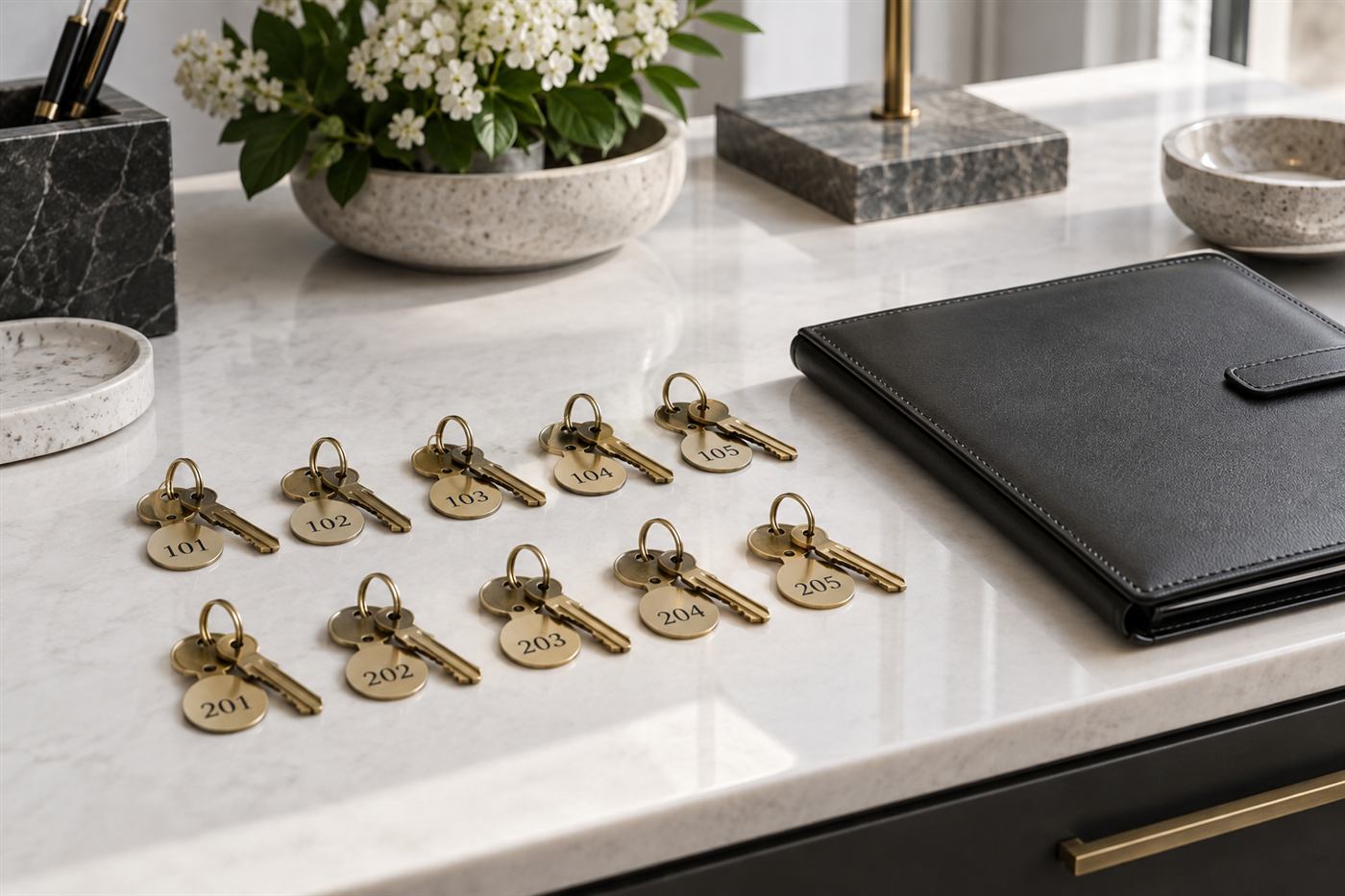
What makes lodging properties different from other buildings
In a home, a lock protects a family. In an office, it protects a business. In a hotel or inn, it protects strangers who change every day, and it has to do so while letting housekeepers, maintenance staff, front desk employees and management pass through dozens of times. That mix of constant turnover and constant use is hard on hardware and hard on key control.
Small lodging properties in Palm Beach County come in many shapes. There are boutique hotels near the beach, older motor inns along the main roads, bed and breakfasts in historic homes, and small resort-style properties tied to golf or boating. Some have a front desk staffed around the clock, and others have an owner living on site who answers the phone. The right lock solution depends heavily on which of these you are running.
A mobile locksmith who works with lodging properties starts by understanding the flow of people. Who checks in, how, and when. Who cleans, who repairs, who has master access. Who is responsible when a key goes missing. Answering those questions makes the hardware choices much easier.
Guest room locks: mechanical keys, key cards and hybrids
Guest room doors today fall into three groups. Traditional mechanical locks use a metal key and a cylinder. Electronic key card or key fob locks read a credential at the door and record who entered. Hybrid arrangements combine both, with an electronic reader for guests and a mechanical override for staff.
Mechanical locks are simple and independent of power, which matters in a region where storms cause outages. Their weakness is key control. A guest who leaves with a key, or a key that is copied, means the lock can be opened by someone who should not have access, and the only remedy is rekeying the cylinder. Over time a property with only mechanical keys often sees keys scattered across the region.
Electronic locks fix the problem by changing the credential for each stay, so an old card simply stops working. The costs are battery maintenance, software, occasional reader failures, and a need for a plan when the system goes offline. A good property keeps a mechanical backup, such as a key override held by management, so that a dead battery does not mean a guest sleeping in the lobby. Our electronic lock service page explains what a technician checks on these units.
Rekeying between guests and after a lost key
On a mechanical system, a lost or unreturned key is the most common reason to call a locksmith. The right response depends on the circumstances. If a single key is missing and the guest can be reached, you may only need to wait. If a key is gone and the guest cannot be found, the room cylinder should be rekeyed so the missing key no longer works.
Rekeying changes the internal pin arrangement so that old keys stop working, and new keys are cut to match. It is usually faster and less disruptive than replacing the lock, and it keeps your existing hardware. Our rekeying page explains how the process works, and the how rekeying works guide goes through it step by step in plain language.
A sensible property keeps a policy. If a room key is lost with a guest still in residence, the lock is rekeyed or the cylinder swapped for a spare. If a key is lost after checkout, the room is held out of service until it is dealt with. A technician can also keep a small stock of pre-keyed cylinders that can be swapped in quickly, which makes a repeated problem much less disruptive.
Staff keys, master keys and the housekeeping problem
Housekeeping is the busiest user of any lodging property's keys. A housekeeper may open dozens of doors in a shift, usually with a master key or a staff card. A lost master is far more serious than a lost guest key, because it opens many rooms at once.
Good practice here is to limit who holds a master, to use a restricted keyway so that masters cannot be copied at a hardware store, and to separate floor masters from a grand master. A floor master opens only one floor, so losing it does not expose the whole building. A grand master stays with management and is not carried around.
For properties with electronic locks, staff cards should be assigned to individual people and be capable of being deactivated immediately. If a staff member leaves, you want to remove their access with a few clicks rather than rekey every door. Our master key systems page and the key control programs page set out the structure in more detail.
- Keep a written log of every master and staff key, with the holder's name.
- Use a restricted keyway so masters cannot be duplicated without authorization.
- Stamp keys with a do not duplicate mark, and treat it as a reminder, not a safeguard.
- Separate floor, wing and grand master levels so one loss does not expose everything.
- Collect keys and deactivate cards on the day an employee leaves.
Fire safety and guest egress
Lodging properties carry life-safety obligations that homes do not. Guests must be able to leave a room quickly in an emergency, even if they are unfamiliar with the lock and even in the dark. A lock that is hard to operate from the inside is a hazard, no matter how secure it is.
Guest room doors generally use hardware that lets the door be opened from the inside with a single, simple motion. Secondary devices, such as a swing bar or a chain, are meant to be quick to release. Corridor doors, stairwell doors and exit doors often use panic hardware or exit devices that open under pressure. These are specialized, and they should be serviced by someone who knows what the door is designed to do.
A locksmith will not suggest changing any hardware in a way that would slow exit. If your property is inspected by a local fire official, their requirements come first, and a technician can help you meet them rather than argue with them. Our panic bar and exit device service page and the fire safety and door locks guide explain the principles.
Connecting doors, balcony doors and sliders
Many guest rooms include extra openings besides the main door. Connecting doors allow two rooms to be combined for a family, balcony doors open to the outside, and sliding glass doors in resort rooms are common in Florida. Each one has its own lock and its own weakness.
A connecting door needs a lock on each side, so that either room can be isolated, and both locks must be secure when the rooms are rented separately. A balcony or patio slider is often the most overlooked entry point, since the standard latch is easy to defeat. Adding a secondary lock or a bar makes a real difference for guest security. Our sliding glass door locks page covers common upgrades.
For ground floor rooms near a pool or garden, a technician will look at windows, too. A broken window latch is a quiet way for an incident to start. A short walk-through of the property, checking every opening a guest can reach, is one of the more valuable things a locksmith can do.
Common areas, back of house and office
Guest rooms are only part of the picture. A lodging property also has a lobby, an office, a laundry room, a storage room for linens and supplies, a maintenance shop, an equipment room and sometimes a kitchen or a breakfast room. These spaces tend to be keyed casually, because everyone assumes staff will be careful.
The office or the cash room deserves its own key and its own control. Laundry and storage rooms attract theft of linens and supplies. Pool equipment rooms, which hold chemicals, must be locked and kept away from guests, especially children. A pool gate should self-close and self-latch, and the latch must work reliably in humid conditions.
A locksmith can often fold these doors into your master key plan so that each role has appropriate access. The result is fewer keys on a ring, fewer lost keys and a clear answer when something goes missing. See our pool gate and door security guide for related points.
Seasonal demand, storms and humidity
South Florida lodging has a strong seasonal pattern. Busy winter months mean more wear on hardware and less time for maintenance. Quiet summer months are the ideal window for a lock review, a rekey and an overhaul of anything that has been giving trouble.
Humidity and salt air affect lodging properties near the coast. Doors that stick in damp weather, cylinders that feel gritty and latches that need a shove are all signs of corrosion or swelling. Our guide to caring for locks in salt air offers practical advice. A property can ask a technician to inspect representative rooms and identify which hardware is aging.
Storm preparation matters, too. A guest room door that does not latch firmly will rattle in strong wind and may fail. After a storm, check doors for shifted frames, bent strike plates and swollen wood. A good routine is to keep a few spare cylinders and a small stock of common hardware so that a single failure does not take a room out of service for long.
Bed and breakfasts and historic homes
A bed and breakfast usually occupies a house that was never designed as a lodging property. Doors may be older solid wood, hardware may be antique, and the layout may mix family space with guest space. These properties need thoughtful solutions.
In a historic home, replacing every lock with modern hardware can damage the character the guests came for. A technician can often rekey existing locks, restore a mortise lock or fit a discreet modern cylinder inside an older faceplate. Our mortise lock service page describes how this kind of work is done.
A bed and breakfast also needs a clear boundary between guest areas and private living areas. An owner who lives on site wants a lock on the family quarters that guests cannot open, and a plan for keys when the owner is away. A small property might use keyed-alike hardware for the family areas and a separate keying for each guest room, with one master for the owner.
Guest privacy, safety and honest records
Guests judge a property by how safe they feel, and the lock is the most visible sign. A door that closes with a firm click, a deadbolt that turns smoothly and a viewer or a secondary latch all reassure. A door that sticks, rattles or needs a shove sends the opposite message and tends to appear in reviews.
Keep an honest record of who entered a room and why. Electronic locks help by logging staff entries, but a paper log works too. If a guest reports that something is missing, being able to say who had access, and when, is valuable to both sides. A technician can help you set up the logging features of an electronic system or advise on a simple routine for mechanical keys.
How a lodging visit works
Call and describe your property: how many rooms, what kind of locks, what problem you are having. Quotes are given only by phone. A single lock repair or a rekey of a few rooms can often be quoted from your description. A larger project, such as a full master key system or an electronic lock upgrade, needs an on-site visit first. There is a service call charge, explained on the phone before dispatch.
Many properties prefer to schedule work in the quiet part of the day, between checkout and check-in, and a technician can plan around that. Let the dispatcher know which rooms are empty and when. Never ask a technician to work on an occupied room without the guest's knowledge.
Have your keys, a list of problem rooms and the name of someone with authority to approve the work. If you do not know the hardware brand, a photograph helps.
- Describe the property, the number of rooms and the problem when you call.
- Receive a phone quote for simple work, or schedule a visit for larger work.
- Tell the dispatcher which rooms are empty and the best time of day.
- The technician inspects the doors, explains findings and agrees the scope.
- Each door is tested with the new keys or credentials before the technician leaves.
Planning a lock upgrade without disrupting guests
The best upgrades are staged. Start with the doors that cause the most complaints, which are often the same few rooms. Then move to master key restructuring, then to common areas. A staged plan spreads the work and keeps rooms in service.
Keep a record of every change. A short log noting the date, the room, the work done and who holds new keys makes future work faster and settles disputes. If you ever sell the property, a clear key record is something a buyer will appreciate.
If you operate a hotel, an inn or a bed and breakfast anywhere in Boca Raton, Delray Beach, Boynton Beach, Pompano Beach or the surrounding area, call to talk through your doors and your plans. A technician can help you decide what to fix now and what to schedule for the slow season.
Questions people ask
Do small hotels need electronic key cards?
Not necessarily. Mechanical locks work well when keys are well controlled and rekeyed when lost. Key cards make it easier to cancel a missing credential and track entries, but they need batteries, software and a plan for outages. Many small properties use a mixture. A technician can explain which fits your size and budget over the phone.
What should we do when a guest leaves with a room key?
If the room is empty and the guest cannot be reached, treat the key as compromised and have the cylinder rekeyed before the next guest checks in. Rekeying makes the old key useless and keeps the same hardware. Keep a policy so staff know when to hold a room and when to call for service.
How can we limit damage if a housekeeping master key is lost?
Use floor or wing masters rather than one key that opens everything, and keep the grand master with management. A restricted keyway stops masters from being copied easily. If a master goes missing, only the doors it opened need rekeying. A technician can plan this structure before a loss happens.
Can a locksmith work around occupied rooms?
Yes, work is usually scheduled between checkout and check-in, or when rooms are empty. Tell the dispatcher which rooms are vacant and when. A technician will not enter an occupied room without the guest being aware and the property's authorization, and will ask who can approve the work on arrival.
Does a bed and breakfast need different locks from a hotel?
Often yes. A bed and breakfast is usually a converted home with older doors and a mix of guest and private areas. A technician can rekey existing hardware, restore older mortise locks, and give guest rooms their own keying with a master for the owner, without losing the character of the building.
What does a visit to a lodging property involve?
You describe the property by phone and receive a quote for simple work. Larger jobs begin with an on-site inspection, and the service call charge is explained before dispatch. The technician walks the doors, explains what needs attention and agrees the scope with you before starting. Call to arrange it.
Describe the situation by phone and we will tell you what the job involves. Quotes are given by phone. Jobs that cannot be quoted without seeing them need a technician on site, and the service call charge is explained on the phone before anyone is dispatched.
(954) 906-9567