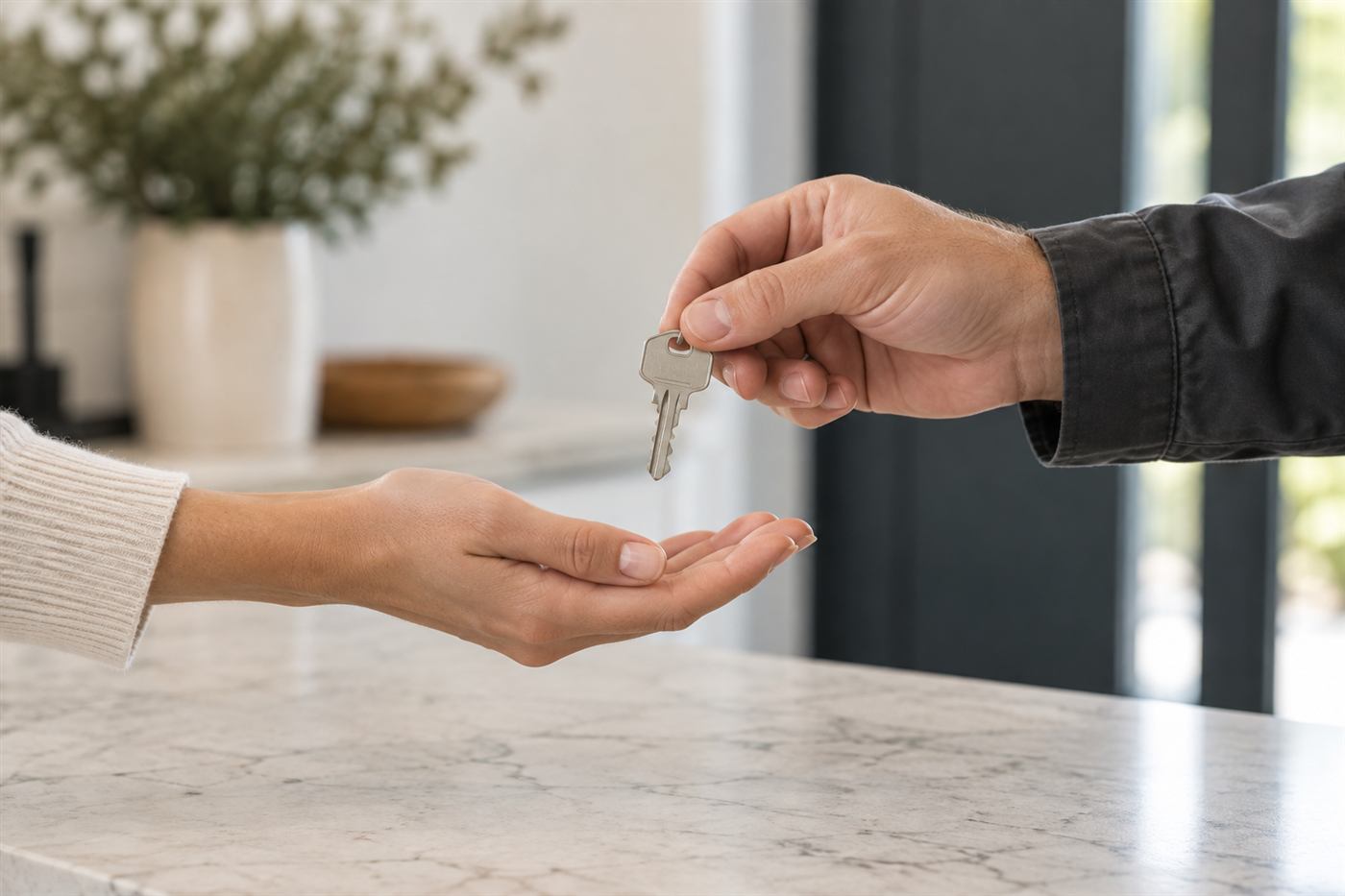
A master key system lets one key open everything and lower-level keys open only what they should. Done right, it's designed on paper before a single cylinder is touched, because fixing a bad hierarchy after installation means replacing hardware, not just keys.
Standard for multi-tenant buildings, offices with departments, and any property where different people need different levels of access to the same set of doors.
Serving Boca Raton and south Palm Beach and north Broward County. Quotes are given by phone before dispatch. Call (954) 906-9567.
What the job actually involves
Map the hierarchy
Who opens what, on paper, before any hardware is touched.
Plan for change
What happens when staff turns over or a key goes missing, decided in advance.
Install top to bottom
Cylinders fitted and keyed to the approved hierarchy.
Hand over documented control
A written record, not just a ring of unlabeled keys.
The mechanics behind one key opening many doors
In a standard lock, each pin stack has one split point, so only one key lifts it to the shear line. In a master keyed lock, some pin stacks get an extra small piece called a master wafer. That wafer creates a second split point in the stack. One key lifts the stack to the first split, and a different key lifts it to the second. Both keys turn the plug. Repeat that across a set of locks with careful planning, and each change key opens only its own door while the master key opens all of them.
The planning is what makes or breaks the system. Every extra split point in a lock adds another possible combination that will turn it. If the combinations are not worked out properly, keys meant for one door can accidentally open another. That is called cross keying, and in a badly designed system it happens far more often than owners realize. A proper design uses a structured progression so that every key opens exactly what it should and nothing else.
Because the pinning follows a written plan, the plan is as important as the hardware. It records every key code, every cylinder and the relationship between them. With that record, adding a door or replacing a lost key later is a straightforward job. Without it, the next locksmith has to take cylinders apart to work out what was done, and may end up rekeying more than necessary.
Understanding the hierarchy
The simplest system has two levels: a master key and individual change keys. A small office with six rooms might use this, where each employee has a key to their own office and the owner has one key for everything. Larger properties add levels. A grand master key sits above several master keys, each master opens one group of doors, and each change key opens a single door. Very large sites may go a level higher still.
Think of it in terms of real people. At a medical building in Boca Raton, the property manager might hold the grand master, each practice manager holds a master for their own suite, and staff hold change keys for the rooms they use. Cleaning crews may get a separate master that opens offices but not medication rooms or records rooms. Each of those decisions becomes part of the hierarchy, and each is easier to make on paper than after cylinders are pinned.
More levels offer more flexibility but reduce security, because every level adds split points to the cylinders. A good designer uses only as many levels as the property genuinely needs. We would rather build a clean two or three level system that works reliably than an elaborate one that tries to anticipate every possible arrangement and ends up with weaker locks.
What we ask before any cylinder is touched
We start with a door list. Every door that takes a key gets a name or number and a short description, such as main entry, suite 104, mechanical room, pool gate or storage cage. Then we ask who needs to get through each door, and just as important, who must not. It is common to find doors that should sit outside the hierarchy entirely, such as a server closet, a cash room or a pharmacy cabinet, where only one or two people should ever have access and the master key should not work.
Next we ask how the property changes over time. Does staff turn over often? Do tenants come and go? Are there plans to add units or suites? A system for a stable family office looks different from one for a building that re-leases suites every year. Planning for growth means leaving room in the key codes for doors that do not exist yet, so adding them later does not require re-pinning the whole building.
Finally we ask what happens when a key is lost. If a change key goes missing, usually only that one door needs rekeying. If a master key goes missing, every lock under it is affected. If the grand master goes missing, the entire system may need to be re-pinned. Knowing that in advance shapes who gets the higher level keys. In most well run buildings, the grand master is held by very few people and rarely leaves the office.
Properties that benefit from master keying
Office buildings and professional suites along Glades Road, Yamato Road and the Congress Avenue corridor are a natural fit. So are medical and dental practices where different staff need different access, and small warehouse or flex space in the industrial areas of Boca Raton, Deerfield Beach and Pompano Beach where the office, the shop floor and the loading area need separate control. Churches, schools and private clubs use master systems for the same reason.
Residential properties use them too. Owners of multi unit buildings, from a fourplex in Lake Worth Beach to a larger apartment building in Boynton Beach, often want each tenant on a separate key with one owner key for every unit and the common areas. Condominium associations use master systems for common rooms, where the manager needs access to everything and residents need access only to the pool, gym and mail room. Larger single family homes sometimes use a small system so staff can open service areas without having the key to the main house.
Hotels and short term rentals present a special case. Guests should never be able to open another guest's room, and a lost guest key must be easy to deal with. Many of those properties have moved to electronic credentials for that reason. For smaller operations still using mechanical keys, a carefully designed master system with restricted keys can work well, but it needs to be planned with frequent turnover in mind.
Why the keyway choice matters here
A master key that can be copied at a hardware store is a serious liability. If one copy leaves the building, every lock under it is compromised. That is why we strongly recommend building master systems on a restricted or patent protected keyway. Only authorized people can order additional keys, and every key can be stamped and tracked. For a system where one key opens many doors, that control is not a luxury.
Restricted keyways also make the system easier to manage as it grows. The manufacturer or dealer keeps records tied to the system, and the owner designates who may order keys. When a manager leaves, the authorization is updated. Combined with the written key plan, this gives the owner a clear picture of exactly how many keys exist at each level and who holds them.
Keeping track once the system is live
Every key in a well run system carries a code stamped on its bow, and often a sequence number as well. The code tells you what level the key belongs to without revealing the actual cuts. We advise against stamping keys with door names or room numbers, because a lost key labeled with the door it opens is an easy find for the wrong person. Codes that only make sense with the key plan in hand are safer.
The key log is the day to day tool. It lists every key issued, the date, the person who received it and their signature. When someone leaves, their keys are checked against the log before their last day. When keys are returned, the log is updated. It is not complicated, but it does take discipline, and properties that keep it up rarely face the unpleasant task of rekeying an entire building because nobody knows where a master key went.
Store the key plan and spare keys somewhere secure. A small key cabinet with its own lock, kept in a manager's office, is common. For larger properties, a dedicated key control cabinet with a sign out sheet or an electronic key cabinet can be worth it. We can advise on what suits the size of your system.
Taking over or repairing an old system
Many buildings have a master system that was installed years ago and has not been documented since. Keys have been cut and handed out by several different people, some locks have been replaced with non matching hardware, and nobody has the original plan. The result is a building where some keys open more than they should and nobody is sure who holds a master.
The first step with a system like that is an audit. We identify each cylinder, work out what keys operate it, and build a picture of the current structure. From there, the owner can decide whether to document and keep the existing system or start over with a new design. If master keys are unaccounted for, starting over is usually the right answer, because there is no way to be sure the old masters are not still in circulation.
If the existing system is sound and the records can be reconstructed, we can document it properly and continue from there. Adding new doors, replacing damaged cylinders and issuing new change keys then becomes routine. The goal is always a building where the owner can look at a single document and know exactly what each key opens.
Why mixed hardware causes problems
A master system works best when all the cylinders come from the same manufacturer and use the same keyway. When a tenant or a maintenance worker replaces a lock with whatever was available at the store, that door drops out of the system. The master key no longer opens it, and the property manager may not find out until an emergency. Over years, this is how many buildings end up with a mix of master keyed and stand alone locks.
Setting a clear rule helps. Tenants and staff should not change locks themselves, and any lock replacement should go through management so the new cylinder is pinned to the plan. Written into a lease or an office policy, this keeps the system intact. We can supply cylinders that fit a range of hardware so the same system extends across entry doors, offices, cabinets and even padlocks on gates or storage.
Maintaining a system in salt air and humidity
Master keyed cylinders have more small parts in each pin stack than standard cylinders, which makes them a little more sensitive to dirt and corrosion. In buildings close to the Atlantic or the Intracoastal, exterior cylinders on gates, pool doors and service entrances need periodic attention. A sticking cylinder in a master system is more than a nuisance, because staff start forcing keys and eventually break one off inside the lock.
A simple maintenance routine helps. Check exterior cylinders at the start and end of hurricane season, clear any debris from keyways, use a dry lubricant suited to the hardware, and replace worn keys before they fail. Worn master keys are particularly worth replacing, because they are used on many locks and wear faster than change keys. We can include a maintenance check when you add doors or issue new keys.
Responding when a key goes missing
How you respond depends on the level of the lost key. A missing change key usually means rekeying one cylinder to a new change combination that still works with the master above it. The rest of the building carries on as before. This is where a well documented system pays off, because we can look at the plan, choose an unused combination and re-pin that one door without affecting anyone else.
A missing master key is more serious. Every door under that master should be treated as exposed. Depending on the design, it may be possible to re-pin only the cylinders in that group to a new master while leaving the rest of the building alone. That is one of the practical benefits of a multi level system: a loss at one level stays contained to one section of the building rather than spreading across the whole property.
When the grand master is lost, the honest answer is usually that the whole system needs to be re-pinned, and that is exactly why the grand master should be issued sparingly. Whatever the level, act promptly. The longer a key is unaccounted for, the harder it becomes to rule out that someone has used it or had it copied.
Master keys alongside card and fob access
Many buildings use access control on the main entries and mechanical keys everywhere else. That combination can work very well. The perimeter doors get audit trails and the ability to remove a credential instantly, while interior offices, storage rooms and utility closets stay on a master key system that does not depend on power or a network. The two systems should be planned together, though, so nobody ends up with a key that bypasses a controlled door.
Most electronic locks and exit devices still have a mechanical override cylinder for emergencies. Those override cylinders should be keyed into the master system at a level that only management holds, not left on a random factory key. We look at every override during the design stage so the building has one clear set of rules, whether a door opens with a card, a key or both.
Emergency access deserves its own line in the plan. Fire rescue and building engineers may need to get through doors quickly during an alarm, a flood from a burst pipe or a power failure after a storm. Many buildings keep a set of keys in a secured box for that purpose. Decide which level of key goes in that box, who can open it, and how its contents are checked after each use. A system that works perfectly on a normal day but leaves responders fumbling with an unlabeled ring during an emergency is not finished.
Review the whole system once a year. Compare the key log with the people who actually work in or manage the building, collect keys from anyone who no longer needs them, and note any door that has drifted out of the plan.
What to have ready before we start
Walk the property with a floor plan or a simple sketch and number every door. Note what each door protects and who uses it. List the people or roles who need keys, and group them by what they need to open. If there are doors that must stay private, mark them clearly. That rough document is the foundation of the design, and having it ready saves a lot of back and forth.
Decide who will be responsible for the system. That person approves the design, holds or controls the highest level keys, and authorizes new keys going forward. For a business, it may be the owner or an office manager. For an association, it is normally the board acting through management. We will need to confirm that authority before we install anything, and we will hand over the key plan and key log to that person when the job is complete.
Allow time for the design stage. The installation itself is often a single visit, but agreeing on the hierarchy may take a conversation or two, especially when several people have opinions about who should open what. It is time well spent. A master system is expected to last for years, and getting the design right at the start is far less costly than changing it once every cylinder in the building has been pinned.
Need master key systems done right?
See all services · See areas served
Describe the situation by phone and we will tell you what the job involves. Quotes are given by phone. Jobs that cannot be quoted without seeing them need a technician on site, and the service call charge is explained on the phone before anyone is dispatched.
(954) 906-9567