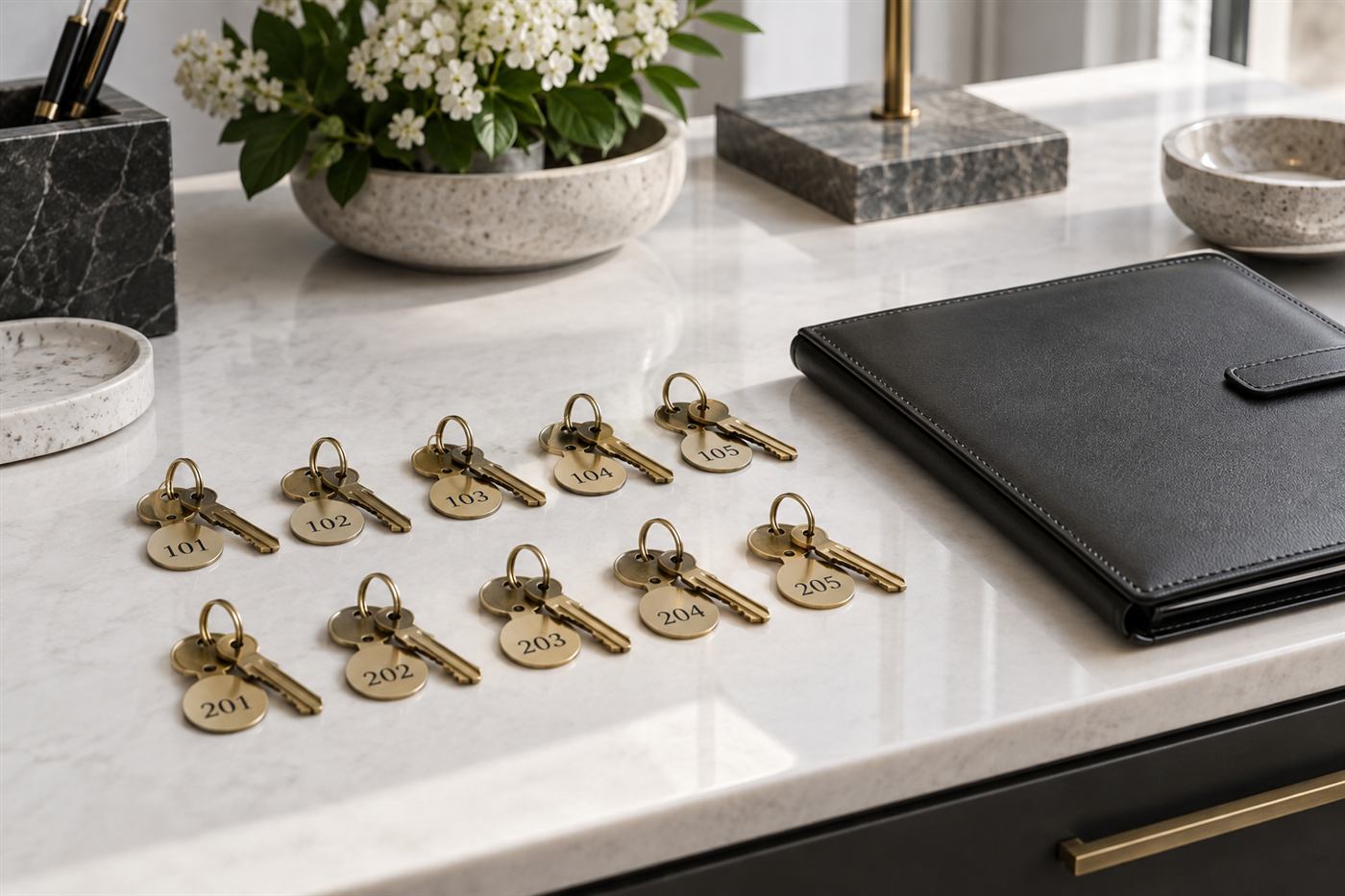
What life in a planned community means for locks
Planned communities are built with a plan. Streets, lots, landscaping, and often the look of each home follow shared guidelines, and an association keeps them in order. That tends to produce neighborhoods with similar houses, similar doors, and a similar generation of hardware, because many homes were built within a few years of each other.
For lock work this has practical effects. Homes of the same age often share the same weak points, such as the same brand of entry set, the same short strike plate screws, and the same sliding door latch. A technician who has seen those patterns can diagnose problems quickly. It also means that many homes reach the same stage of wear at the same time.
A second effect is the association. Exterior changes may require approval, and gates, mailboxes, and common areas are often managed by the community. Before changing visible hardware, check what your governing documents require. Quotes are given by phone, and the dispatcher can discuss how your community's rules might affect the job.
Gated entries and the keys that go with them
Many west Boca neighborhoods have a gated entrance with a guard, a call box, or a barrier arm. Getting a technician into the community depends on those arrangements. When you call a locksmith, tell the dispatcher that the community is gated, and expect that the technician may need to be announced at the gate by name or company.
Contact the gate or the management office ahead of time if possible, and add the technician to any visitor list. If you are locked out and your remote or transponder is inside the house, the guard may need to verify you by another route, such as photo identification and a resident record.
Gate hardware itself is usually the association's responsibility, not an individual homeowner's. If a pedestrian gate latch or a lock at a common area fails, report it to management. A locksmith may be engaged by the association for these items, and individual residents should not attempt repairs on shared gates. See gate lock and latch service and gated community lock service.
Mailbox locks and cluster boxes
Mailboxes in planned communities range from a private box at the curb to a cluster unit shared by several homes. Private boxes usually have a small lock that is the owner's concern, while cluster units and many parcel lockers are controlled through the postal service, which holds the keys to the main compartments.
A resident who loses a mailbox key has a few options, depending on the type of box. For a privately owned box, a locksmith can often open and re-key or replace the lock. For postal-controlled units, you need to contact the postal service rather than a locksmith. A technician will tell you honestly which situation you are in.
A mailbox lock is a small item, but mail theft is a real concern, so keeping it working matters. Our page on mailbox lock service and the problem guide for a lost mailbox key describe what can be done.
Typical home entry doors in planned neighborhoods
Homes in west Boca neighborhoods commonly have an entry door of steel, fiberglass or wood, with a deadbolt and a knob or lever set. Many have a decorative glass panel or sidelights, which matter for security because a lock within reach of glass is easier to defeat. A double-cylinder deadbolt can address this, but it brings a fire safety trade-off, since a key is needed to exit.
Other typical entries include a garage side door, a rear slider to a patio or pool area, and the interior door from the garage to the house. Each deserves a look. The garage entry door is often the weakest, because it is out of sight and was fitted with basic hardware.
Technicians commonly recommend a solid deadbolt with a reinforced strike plate and long screws on the main entries, and a secondary lock or track bar on sliders. See deadbolt installation, strike plate reinforcement and the home security door checklist.
Rekeying after a move, a sale, or lost keys
A planned community has a steady flow of homes changing hands. Anyone buying a house cannot know how many copies of the old keys exist: the previous owners, their relatives, a contractor, a cleaner, a neighbor. Rekeying is a standard move-in step because it changes the lock so those keys stop working.
Rekeying leaves the existing hardware in place and replaces the internal pins to fit a new key. When several locks around the house are rekeyed, they can be made to work with a single key, which simplifies daily life. For homeowners who prefer new hardware as well, replacement is a sensible alternative.
Sellers have an interest too. Handing over keys cleanly, and knowing which ones are accounted for, is part of a tidy closing. See post move-in rekey, the moving day lock checklist and selling a home and handing over keys.
Association rules and exterior hardware
Many communities specify the finish, color or style of exterior doors and hardware. Replacing a lock set with one in a different finish can trigger a notice or a request to reverse the change. The details live in your declaration or architectural guidelines, and they differ from one association to another.
A good habit is to check before buying or changing anything visible. If you plan to replace a lock set, ask management whether the finish and style must match. Rekeying does not change the appearance of anything, and is therefore usually the simplest option.
A technician can suggest hardware that suits the usual standards, such as a matching finish in a common style. They cannot interpret your association's rules for you, and you should confirm any doubts with management. Where a gate or common-area lock is involved, the association generally decides who may work on it.
Humidity, sun and sprinklers: how the setting wears on locks
South Florida's climate is hard on hardware wherever you live. Even inland neighborhoods in west Boca experience strong sun, heavy humidity, afternoon storms and sprinkler overspray. Finishes fade, brass tarnishes, and cylinders swell or corrode. Sprinkler spray that hits an entry door every morning shortens the life of the lock noticeably.
Watch for stiff keys, a deadbolt that needs a push, and a latch that no longer lines up as the door swells and shrinks. Early attention often costs only an adjustment. If left, the lock may seize at a bad moment.
Plain habits help. Redirect sprinkler heads away from the door, wipe hardware occasionally, and use a lubricant made for locks rather than a heavy oil. See lock sticks in hot weather and lock sticks after rain for more detail on seasonal behavior.
Hurricane season and community-wide preparation
When a storm approaches, planned communities tend to move together. Shutters go up, gates may be set to open or closed depending on the plan, and power may fail. Electronic locks and gate operators can stop working, so it helps to know whether a manual key or override exists and where it is.
After a storm, check that doors still latch, that frames have not moved, and that no hardware is bent. Debris and water damage can affect locks. Garage doors and side doors are common weak points. Do not enter a damaged structure if there is any doubt about its safety.
Our guides on hurricane season door lock preparation and checking locks after a hurricane give practical lists. When you want a technician to look at your doors, call and describe the situation, and the dispatcher will explain the quote and the service call charge before dispatch.
Pool areas, patios and rear doors
Many west Boca homes have a pool and screened enclosure at the back, and the rear slider and patio doors see constant use. Wet feet, chlorine and sun are hard on door hardware. Sliding door latches corrode, rollers wear, and the lock bar can stop engaging. A door that does not lock at the back is as open as one that does not lock at the front.
Pool safety adds another layer. Doors and gates that lead to a pool are often subject to rules designed to keep small children out. A self-closing, self-latching gate and an alarm or lock on the door that opens onto the pool are common measures. A locksmith can help with the lock side of these arrangements, while safety standards come from the relevant authorities.
Screen enclosures have their own doors with simple latches that are easy to defeat. They are not a security barrier, and nobody should treat them as one. The inner slider or door needs to be secure. See pool gate and door security and sliding glass door locks.
Garage entries and the door from garage to house
Garages are a frequent route into a house. The overhead door is controlled by a remote, and a lost or stolen remote can leave it open to anyone. The door between the garage and the living space is often a basic one, and it should be treated as an exterior door, with a solid deadbolt and a reinforced strike.
A common habit is leaving that interior door unlocked because the garage seems like part of the house. If a garage opener is copied or the side door is forced, the thief has a quiet, hidden spot to work. Keep that door locked, and consider rekeying it so it works with the same key as the front door.
Garage side doors, which lead from the garage to the yard, have the same issue. They are out of sight and often have hardware that has never been touched. See garage entry door locks and garage side door sticks for repairs and upgrades.
Keys for contractors, cleaners and family helpers
A home in an established community often has a stream of people with legitimate access: cleaners, landscapers, pool service, a relative who checks on things during the summer. Each one is given a key or a passcode at some point, and few are ever collected back. Over time, a household can lose track of who holds access.
There are practical ways to manage this. A keypad lock with individual passcodes lets you remove a person without changing anything else. Rekeying lets you restore control when you cannot account for the keys. A lockbox, used carefully, can hold a spare for a trusted service person.
Choose the method that suits how you live, and review it once a year. A technician can discuss options on the phone and explain what each involves. For more reading, see how to keep keys organized and the lockbox and key safe guide.
Keeping shared and private keys separate
In a community with shared amenities, it is easy for personal and common keys to get tangled on one ring. A gate key, a clubhouse key, a mailbox key and a front door key all hang together, and losing the ring means losing access to everything. Keeping the keys that matter most separate from the keys that are only occasionally needed limits the damage.
A technician can help with the private side. If your front door, garage entry and side gate can all be rekeyed to one key, you carry fewer keys. If a key is lost, you rekey only the locks you control, and report the shared keys to management so that they can decide what to do about the common areas.
Do not copy keys marked as restricted or issued by the association, since doing so may break the rules of the community and often will not work. Ask management how to obtain a replacement properly. For your own door keys, see spare key duplication and how key cutting works to understand why a poor copy fails, and why a copy of a copy is usually worse than a copy made from the original.
When you want help planning a simple, sensible key setup for your home, call and describe the doors and the number of people who need access.
Questions people ask
Will the guard let a locksmith into a gated community?
Usually, if the guard has been told to expect the technician. Tell the dispatcher that the community is gated, and let the gate or management office know ahead of time. Some communities want the visitor's name, company and vehicle details. Being ready with a resident record or identification speeds things along.
Can a locksmith replace a lost mailbox key?
For a privately owned box, often yes, by opening and re-keying or replacing the lock. For postal-controlled cluster boxes and parcel lockers, the postal service holds the keys, so you need to contact them instead. A technician will tell you honestly which situation you are in.
Do I need approval to change my front door lock?
Possibly, if the new lock changes the visible finish or style. Many associations have standards for exterior hardware. Check your governing documents or ask management before replacing a lock set. Rekeying changes nothing visible, so it is typically the simplest choice.
Should I rekey after buying a home in the community?
It is a sensible step. You cannot know how many copies of the old keys exist or who holds them. Rekeying changes the lock so those keys stop working, normally without replacing the hardware, and can bring several locks onto one key for convenience.
Why does my front door lock stick more in summer?
Heat, humidity and sprinkler overspray make doors and frames swell and wear on cylinders. The latch may no longer line up, and moisture can corrode internal parts. Adjusting the strike, redirecting sprinklers, and using a suitable lock lubricant often help. A stubborn problem needs a technician to look at it.
How do I get a quote?
Call and describe the work. Quotes are given by phone, never online. Simple jobs can often be quoted on the call, while complicated ones may need an on-site visit. There is a service call charge, and it is explained on the phone before anyone is dispatched. No one can promise an arrival window.
Describe the situation by phone and we will tell you what the job involves. Quotes are given by phone. Jobs that cannot be quoted without seeing them need a technician on site, and the service call charge is explained on the phone before anyone is dispatched.
(954) 906-9567Related pages
Walking the doors before choosing between rekey and replace
When a technician visits a home in a planned community like Boca Del Mar, the first few minutes are usually spent walking the doors rather than looking only at the lock that prompted the call. The front entry, the door from the garage, the patio slider and any side gate each get a look, because a key that was lost or copied freely may open more than one of them. The technician notes which locks share a key, which are different brands, and which are worn enough that a fresh set of pins would not hold for long. That list becomes the basis for the scope, which is explained before any work begins.
Rekeying keeps the existing hardware and changes the internal pin pattern so old keys stop working. It makes sense when the lock bodies are sound, the finish still matches the rest of the door, and the latch operates smoothly. Replacement makes more sense when the bolt drags, the handle is loose on the door, or the finish has pitted from years of damp air. Sometimes the answer is a mix: rekey the good locks to one key and swap the tired ones. The tradeoff is simply between keeping what works and avoiding a repeat visit in a year or two.
Homeowners can make this visit smoother by gathering every key they can find before the technician arrives, including the odd ones in a kitchen drawer. Knowing which key fits which door saves time and shows where the extra copies went. It also helps to decide in advance whether guests, cleaners or family members should receive new keys afterward. If an association has opinions about exterior hardware finishes, check those first and mention them when you call, so that any replacement choice fits the rules and nobody has to redo the work later.