Home > Services
Rekeying
New tenant, lost key, or a contractor who never returned one. We rekey existing hardware so old keys stop working, usually without new locks.
Lock Replacement
Worn, forced or simply wrong-for-the-door hardware replaced with cylinders and strikes actually rated for the application.
High-Security Cylinders
Patent-protected keyways that can't be duplicated at a kiosk, with a documented key control policy for the property.
Master Key Systems
Hierarchies designed on paper first, who opens what, and what happens when one key goes missing.
Access Control
Card, fob and mobile credential systems for offices and multi-tenant buildings, with the door hardware to match.
Lockouts & Safes
Residential, commercial and vehicle lockouts opened without damage, plus safe servicing and combination changes.
Picking the right service for your situation
Most people who call a locksmith know the problem they have, not the name of the service that fixes it. That is fine. You might say that you just closed on a house, that an employee quit on bad terms, that the deadbolt stopped turning, or that the office keeps losing keys. Each of those points toward a different service on this page, and sometimes toward a combination of two. The sections below walk through the situations we see most across Boca Raton and the surrounding cities, and which service usually fits each one.
The short version is this. If the hardware is fine and you only need old keys to stop working, that is rekeying. If the hardware itself is worn, damaged or too light for the door, that is replacement. If you need to control who can copy a key, that is a high-security cylinder. If different people need different levels of access to many doors, that is a master key system. If you want to add and remove people without touching a key at all, that is access control. And if you are standing outside a door or a safe that will not open, that is a lockout call.
You do not need to decide before calling. Describe what happened and what you want to achieve, and we will tell you which service fits, what it involves and what it costs before anyone drives out.
Just bought a home
Closing day is the single most common reason people call us. The seller hands over a few keys, but there is no way to know how many others exist. Builders, previous owners, their relatives, cleaners, pool techs, pest control and real estate lockboxes can all account for copies. The standard answer is to rekey every exterior lock, including the door from the garage into the house, so the only working keys are the ones cut for you.
If you are moving into an older home in a neighborhood like Boca Villas, Palm Beach Farms or the older sections of Pompano Beach, you may also find hardware that has reached the end of its life. In that case, a mix of rekeying and replacement is common: keep the good locks, replace the tired ones, and key everything to one new key. Newer homes in communities west of the turnpike often have decent hardware from the builder, so rekeying alone is usually enough there.
New owners should also clear electronic access. Garage door keypads, smart lock codes and any app accounts tied to the previous owner need to be reset. Gate remotes and community fobs should be registered in your name with the HOA. None of that is complicated, but it is easy to forget in the rush of moving.
Managing rental property
Landlords with single family rentals, duplexes, villas or small apartment buildings deal with key turnover constantly. Every tenant change is a chance for a key to walk away. Rekeying between tenancies is the minimum, and it is inexpensive enough to do every time. Owners with several units often find it simpler to move to a restricted keyway, so tenants cannot copy keys at all, and to master key the units so one owner key opens each one.
Landlords also need to know where the line is. We work only with the owner or an authorized property manager when changing locks on a rental. We will not open or rekey a unit that a tenant still legally occupies without proper authority, and an eviction lockout requires the Sheriff on site with court paperwork. Keeping those rules clear protects owners from disputes as much as it protects tenants.
Offices, practices and shops
Businesses usually call for one of three reasons: a key holder has left, the building has grown to the point where nobody knows who has keys, or a lock has failed. A departed manager with a key is a rekeying job for the affected doors. A growing office with rooms that need different levels of access is a good candidate for a master key system. A business with frequent turnover, multiple shifts or a need to know who opened which door and when is often better served by access control on the main entries.
Many businesses end up using more than one of these together. A medical practice in a professional plaza might put access control on the main entry and the medication room, a master key system on the interior offices, and a high-security cylinder on the records room. A restaurant might use access control on the back door and keep the front on conventional hardware. The right combination depends on how the business runs, and we are glad to walk through it with you.
Retail storefronts with aluminum and glass doors have their own hardware, and a failed storefront lock is one of the more urgent calls we get from businesses. The lock bodies, cylinders and bolts used in those doors are specific to narrow frames, and replacing them properly means matching those parts rather than improvising.
Associations and shared buildings
Condominium associations and homeowners associations manage doors that belong to everyone: lobby entries, pool gates, fitness rooms, mail rooms, trash rooms and storage. Keys for those doors tend to multiply over the years until the board has no idea how many exist. The usual fix is either a restricted keyway for common areas, issued only through management, or access control with fobs tied to each unit so credentials can be removed when a unit sells.
Boards also deal with emergency access to units, contractor access during renovations and access for vendors such as elevator and fire system technicians. A master key system can give management a controlled way into mechanical and utility rooms without handing out keys to the residential side. We work only with authorization from the board or management company on common area doors, and we can prepare a clear written summary of what was done for the association's records.
Homes that sit empty part of the year
South Palm Beach County has many owners who spend only part of the year here. Their homes and condos depend on property watch services, neighbors and contractors while they are away, and that means more keys in more hands. For these owners, the useful services are rekeying at the start of each season, a restricted keyway on the main entry, and a separately keyed service door for providers who need access during the months the owner is gone.
Before leaving for the summer, it is worth checking that every lock works smoothly, replacing keypad batteries, and confirming who holds keys. Coming back in the fall to a dead battery on a keypad lock, or a lock seized by humidity, is a common and avoidable frustration.
Automotive locksmith work
Automotive work sits alongside residential and commercial. It covers opening a locked car, replacing lost keys, programming transponder keys and remotes, and dealing with proximity and push button start systems. Most modern keys contain electronics that must be programmed to the vehicle, so replacement is more than cutting a blade. We will ask for the year, make and model when you call, and we will need the registration or title and your ID before any key work.
If you have only one key for your car, getting a spare made before you lose it is far simpler than replacing a key when none remain. It is one of the most practical things a car owner can do, and it takes much less time than an all keys lost situation.
Divorce, estates and caregivers
Some of the most sensitive calls come from changes in a household rather than in the hardware. After a separation, one person may want the locks changed on a home that both people used to share. When a parent passes away, the family may need to secure the house while the estate is settled, often with several relatives who had keys over the years. When a caregiver, a nurse or a house manager leaves, the family wants to be certain their key is no longer useful.
In all of these cases, the technical job is usually straightforward rekeying. The part that needs care is authority. We need to see that the person asking has the right to make the change, such as ownership of the home, a court order, or documents showing they are the personal representative of an estate. We cannot referee disputes between family members or former partners, and we will not change locks where the right to do so is unclear. Having the paperwork ready makes the visit simple.
Where electronic locks fit
Smart locks and keypad deadbolts show up in almost every conversation now. They are useful for households where keys get lost, for owners who let in service providers remotely, and for short term rentals where each guest gets a unique code. They also bring batteries to replace, firmware to update and, for some models, a dependence on Wi-Fi or a phone app. We install and service them where they make sense and tell you about the failure modes before you buy.
One point that is often missed: most consumer smart locks still have a standard key cylinder as a backup, and that cylinder is as easy to copy as any other key. If you are rekeying the house, include the backup cylinder on the smart lock, and consider whether it should be on a restricted keyway. Also clear old codes and user accounts whenever someone moves out or stops working for you.
Frame and strike work that comes with the job
Across every service, we look at more than the lock. The strike plate, the screws that hold it, the condition of the door jamb and the hinges all decide whether a door holds under force. A strong deadbolt in a jamb held by short screws is easier to kick in than most owners realize. When we are on site for a rekey, a replacement or a lockout, we will point out a weak strike or a split jamb and offer to fix it while we are there.
That is not an upsell. It is the part of the opening that fails most often in a forced entry, and it is usually a small addition to a job we are already doing. If you would rather leave it, that is your decision, and we will still do the work you called about.
Home and business safes
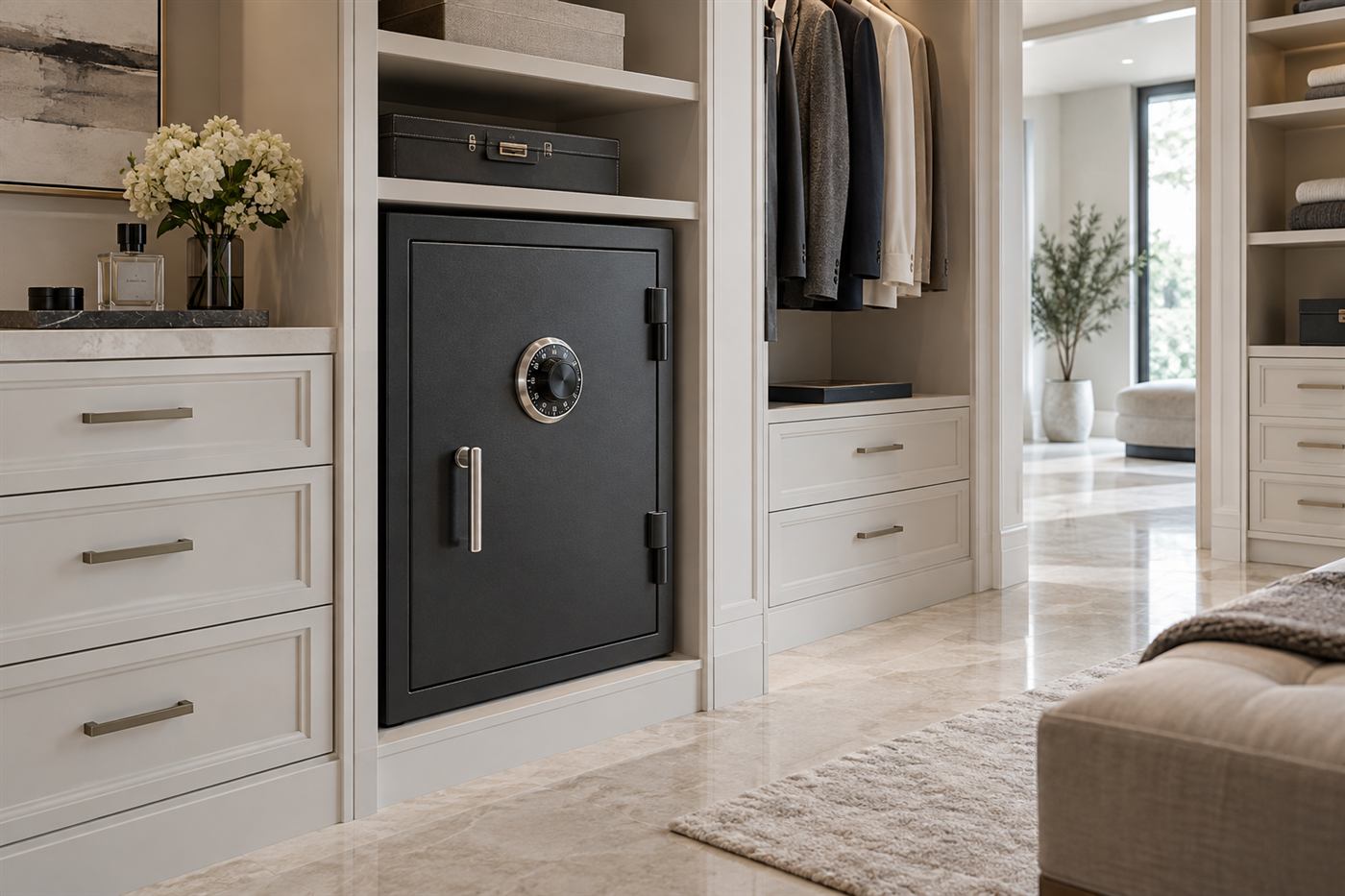
Safes appear on this page under lockouts, but safe work covers more than opening one that will not open. Combination changes after someone leaves, battery replacement on keypads, servicing mechanical dial locks, and anchoring a safe properly to the floor all fall under the same service. A safe that is not bolted down can often be carried away whole, which defeats its purpose. If yours is sitting loose in a closet, anchoring it is worth considering.
Where the safe sits matters as much as how it is fixed. A closet floor on a concrete slab usually gives a solid anchor point, while an upper floor with wood framing may need a different approach. Keep in mind that many safes sold as fire resistant are not built to keep water out, so a ground floor safe in a flood prone area near the Intracoastal is worth rethinking before storm season.
Honest advice, including when not to spend
Part of the job is telling you when a service is not needed. If your locks are sound and you only need old keys to stop working, we will not suggest new hardware. If a smart lock does not suit a door that faces full weather, we will say so. If a small office does not need a full access control system and a handful of restricted keys would do the job, that is what we will recommend.
We would rather you spend on the part of the opening that actually improves security than on the most expensive box on the shelf. Ask us to explain any recommendation, and we will walk through why it fits your door and your situation.
How the local climate shapes every service
Every service on this page is affected by where we are. Salt air along the barrier island and the Intracoastal corrodes lock internals and finishes. Summer humidity and heavy rain get into cylinders and electronics. Hurricanes bring wind pressure that tests how well doors latch, and power outages that test how access control systems behave. That is why we pay attention to finishes, materials and weather ratings when recommending hardware, and why we ask about exposure when you describe a problem.
A good habit for any property here is a quick lock check twice a year, at the start and end of hurricane season. Try every key in every lock, make sure every door latches without being pushed, test any keypad or smart lock batteries, and note anything that feels stiff. Catching a worn lock in May is far better than discovering it after a storm, when everyone else is also looking for repairs.
quote agreed before we drive
Every job on this page is priced the same way. You describe the work, we ask the questions we need to understand it, and we agree on a price before a technician heads out. If something on site turns out to be materially different from what was described, we explain it and agree on any change with you before continuing. There are no surprise additions once the work is done.
To make that work, the more detail you can give on the phone, the better. Photos of the lock and the edge of the door help a lot. So does knowing the brand, whether the lock has a keypad, how many doors are involved, and whether the property is a house, condo or commercial space. The clearer the picture, the more accurate the price and the more likely we arrive with exactly the right parts.
What we will ask you to have ready
For every service, we confirm that you own the property or have authority to act for it. For homes, that means ID plus a deed, lease, utility bill or similar document with your name and the address. For businesses, it means ID plus a lease, business license or documented authority. For vehicles, it means ID plus the registration or title. This is the same check that protects your property from someone else calling in your name.
Beyond that, it helps to know what you want at the end of the visit. How many keys do you need, and for whom? Should every lock be on the same key? Does your HOA need a copy? Are there doors you want to keep private? Answering those questions ahead of time means the visit is about doing the work, not making decisions on the spot.
Where these services are available
We cover Boca Raton and West Boca, Delray Beach, Highland Beach, Boynton Beach, Ocean Ridge, Gulf Stream, Lake Worth Beach and Wellington in Palm Beach County, and Deerfield Beach, Hillsboro Beach, Lighthouse Point, Pompano Beach, Parkland, Coconut Creek and Coral Springs in Broward County. Every service on this page is mobile, so the work happens at your door, your office or your car.
Each city page has local detail, including ZIP codes and links to the official municipal site. If you are not sure whether your address falls within our coverage, call and ask. The answer takes a few seconds.
Describe the situation by phone and we will tell you what the job involves. Quotes are given by phone. Jobs that cannot be quoted without seeing them need a technician on site, and the service call charge is explained on the phone before anyone is dispatched.
(954) 906-9567