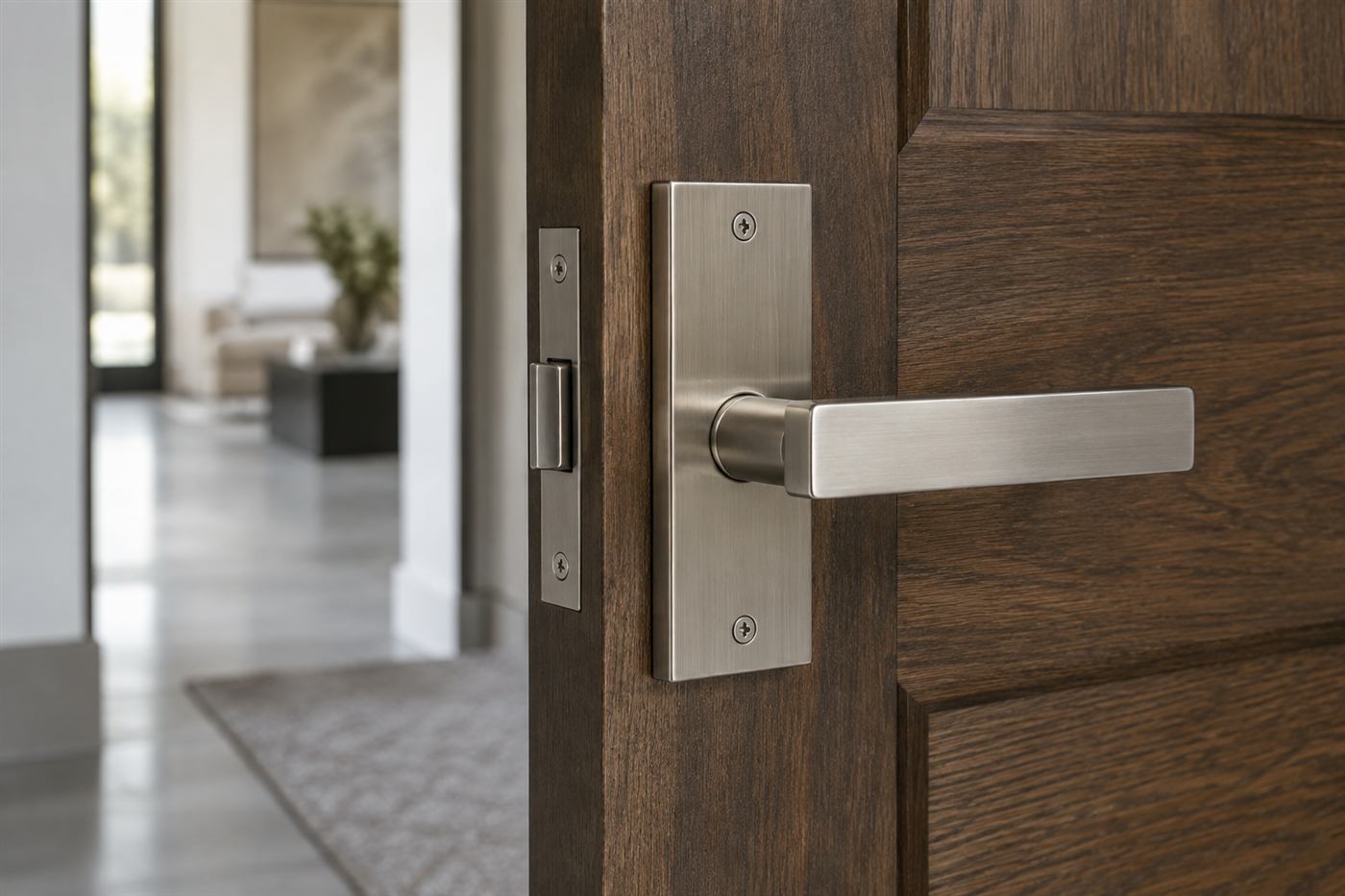
What a thumb turn actually does
The thumb turn is the interior half of a single cylinder deadbolt. On the outside you have a key slot. On the inside you have a small knob or lever, and that is the part you grip every night when you lock up and every morning when you leave. It looks simple, but it is connected to the bolt through a chain of small parts, and any one of them can cause the stiffness you feel in your fingers.
Inside the door, the thumb turn is attached to a flat metal bar called the tailpiece. The tailpiece passes through the door and engages a cam or a drive mechanism inside the lock body, and that mechanism pushes the bolt out into the door frame or pulls it back. When you turn the knob, you are really turning the tailpiece, which moves the cam, which moves the bolt. Resistance can come from anywhere along that path.
That is why the symptom is so common and so confusing. A stiff thumb turn can mean the thumb turn assembly itself is worn. It can mean the tailpiece is bent or has a burr. It can mean the cylinder is out of line with the bolt. Or it can mean the bolt is dragging against the strike plate in the frame, and the thumb turn is simply where you feel the drag. The same feeling, in your hand, has several different root causes.
The first thing to notice: is it stiff everywhere or only in one spot
Before anything else, pay attention to the pattern of the resistance, because the pattern tells a technician a lot. Try the thumb turn while the door is standing open, with the bolt extended into the air and not into the frame. If the knob turns smoothly in that situation, the lock itself is probably healthy, and the trouble is happening where the bolt meets the strike. If the knob is still stiff with the door open, the problem lives inside the lock or in the parts connecting to it.
Next, notice whether the stiffness is the same through the whole turn, or whether it catches at one point. A smooth, even drag through the whole range usually points to dirt, dried lubricant, or a tight fit. A hard catch at one point, followed by easy movement, often points to a burr or a bent tailpiece. A gritty, sandy feel points to debris or corrosion inside the mechanism, which is common in coastal Florida (see locks corroded by salt air) where salt air gets into hardware over the years.
Also notice whether the key works smoothly from the outside. If the key turns the bolt easily but the thumb turn is stiff, the cylinder and bolt are probably fine and the interior assembly is the likely suspect. If both the key and the thumb turn are stiff, the bolt path is the more likely cause. That single comparison rules out a lot of guesswork before anyone picks up a tool.
- Open the door, then turn the thumb turn: smooth means the problem is at the strike or frame.
- Stiff with the door open means the problem is in the lock, tailpiece, or thumb turn.
- Catches at one point usually means a burr, a bent tailpiece, or a worn cam.
- Gritty feel usually means debris or corrosion, common near the coast.
- Key smooth but thumb turn stiff points to the interior assembly.
Worn thumb turn assemblies and loose set screws
Thumb turns are used every day, sometimes several times a day, for the life of the door. Over time the small parts that hold the knob to the tailpiece wear. Many assemblies use a tiny set screw that grips the flat of the tailpiece. If that screw loosens, the knob may spin partway before it engages, which feels like slop. If it is overtightened or the flat has been chewed, the knob can bind instead.
Budget hardware often uses a thin stamped metal thumb turn with a loose fit on the tailpiece, and those wear faster. Heavier hardware uses a solid cast knob with a cleaner fit. Neither lasts forever, but a stiff or wobbly interior piece on an otherwise healthy lock is one of the easier repairs, because the thumb turn can often be replaced without replacing the whole deadbolt, which is a standard part of our lock repair work.
A wobbly thumb turn that is also stiff is a sign worth taking seriously. A knob that moves around on its mounting can put sideways force on the tailpiece, and that force can bend it over time. A bent tailpiece creates the catching feel described earlier, and it can eventually fail altogether. Catching a loose interior piece early is a lot easier on time and hassle than waiting for something to break while you are locked in or out.
Tailpiece and cylinder alignment problems
The tailpiece and the cylinder have to line up with the bolt mechanism inside the door, and the parts that hold them in line are the two long screws that run through the lock body. These screws are tightened to hold the interior and exterior halves of the lock together. If they are too loose, the halves can shift. If they are too tight, or uneven, they can pinch the mechanism and make the thumb turn feel tight.
Alignment also depends on the door itself. Bore holes that were drilled slightly off, a lock body that sits at a small angle, or a door that has swelled in the humid season can all push the cylinder and the bolt out of their intended line. The thumb turn then has to overcome friction that was never meant to be there. People often notice it first in the wet months, when wood doors take on moisture, and the lock seems to stiffen at the same time.
A technician checks this by loosening the mounting screws slightly and testing the action, then tightening them evenly while testing again. If the thumb turn gets smoother when the screws are slightly loose, alignment or pinching is the cause. That is a useful finding, but it is also the point where a professional adjusts it properly, because a lock tightened wrong can end up with a bolt that no longer fully extends or retracts.
When the problem is the door, not the lock
A surprising number of stiff thumb turns have nothing wrong with the lock at all. The bolt throws into a hole in the door frame, and a metal plate called the strike plate sits around that hole. If the door has shifted, because of settling, swelling, loose hinges, or a heavy door sagging on its pins, the bolt no longer lines up cleanly with the hole. It rubs against the edge of the strike instead of sliding in.
You can feel this on the thumb turn as resistance that appears only when the door is closed. It may also show up as a lock that works fine when the door is slightly open but fights you when the door is pushed shut. Some people end up lifting or pulling on the door handle while turning the knob, a habit that is a strong clue the bolt is binding.
Look at the strike plate and the edge of the bolt for bright scrape marks. Shiny metal and fresh scratches mean contact. Hinges that are loose, with screws that spin in stripped holes, are another cause of the same symptom. Fixing the door position, tightening hinge screws into solid wood, or adjusting the strike can bring the thumb turn back to normal without touching the lock body. A technician who understands both lock hardware and doors will check this before suggesting a new lock, which is the right order.
- Bright scrape marks on the bolt or around the strike hole indicate rubbing.
- A door you have to lift, pull or push while turning the knob suggests misalignment.
- Loose hinge screws can let the door drop just enough to bind the bolt.
- Wood doors in humid months may swell and tighten the fit.
Salt air, humidity and dirt inside coastal locks
Boca Raton and the surrounding Palm Beach County coast are hard on hardware. Salt in the air settles on metal surfaces, and humidity keeps them damp for long stretches. Over time, the thin film of oil that keeps parts moving can break down, collect dust and pollen, and turn into a gummy paste. Plated finishes can pit, and the small steel parts inside a deadbolt can develop a rough layer of corrosion that is invisible from the outside.
A lock in a covered entryway with a screen door is usually better off than one on an exposed door facing the water or on a balcony with direct weather. But interior mechanisms are not sealed, so even a protected lock can gather grit over the years. The thumb turn side is often the first place the problem is felt, because it is the part you handle with the lightest touch and notice the earliest.
If your thumb turn feels gritty or has become gradually stiffer over months, rather than suddenly, this is the likely cause. The fix is not to flood the lock with whatever spray is in the garage. Heavy oils and household sprays can attract more dirt and make a short-term improvement that becomes a worse jam later. A technician will usually disassemble, clean, inspect the parts for wear, and apply the right kind of dry or graphite-based lubricant, or recommend replacement if the corrosion has gone too far.
What is safe to try yourself, and what to leave alone
A few simple checks are reasonable for a homeowner and carry no risk to the lock. Look at the screws on the thumb turn base and the mounting screws on the interior plate and confirm nothing is visibly loose. Open the door and compare how the thumb turn feels with the bolt out in the air. Look at the strike plate for scrape marks. Wipe visible dust from around the knob with a dry cloth. These steps give you information to share on a call.
A light application of a dry lubricant made for locks, used sparingly in the key slot and on the bolt edge, is something many people do. Keep expectations modest. If the lock has a mechanical problem, lubricant will not fix it, and if the lock is gummy with old oil, new oil may just add to the mess.
What to leave alone is the force. Do not use pliers on the thumb turn, do not hammer on it, and do not lean your body weight into it. A thumb turn is attached to a thin flat bar, and enough force can twist or snap that bar, which can leave the bolt stuck in the extended position with the door effectively sealed shut. Also resist the urge to take the entire lock apart if you are not familiar with the parts. Small springs and pins are easy to lose, and a lock reassembled wrong can fail at a worse time. If the knob will not move at all, stop and call.
- Check that visible screws are snug, without forcing them.
- Open the door and compare the feel of the thumb turn with the bolt in the air.
- Look for scrape marks on the bolt and strike plate.
- Wipe the knob and surrounding plate with a dry cloth.
- If it still binds, stop using force and call for help.
What a mobile locksmith checks when they arrive
A technician who comes to the door starts by listening to you describe the symptom, and then by feeling it. They will try the thumb turn, try the key, and test with the door open and closed, the same comparison described above. That quickly narrows the problem to the lock, the interior parts, or the door and strike.
From there the work depends on what is found. If the interior assembly is worn, the thumb turn or the whole interior half of the deadbolt can be replaced. If the tailpiece is bent, it is replaced, and the cylinder and cam are inspected for damage. If the lock is dirty or corroded but sound, it can be cleaned and lubricated. If the strike plate or hinges are the cause, the fix is on the door side, which may include adjusting or repositioning the strike or tightening and replacing hinge screws.
In some situations the right answer is a new deadbolt, particularly if the hardware is old, badly worn, or lower quality than the door deserves. A good technician will say so plainly and explain why, and will also say when repair makes more sense. Complicated jobs may need an on-site visit before a final quote, and there is a service call charge that is explained on the phone before anyone is dispatched. Quotes are given by phone, never by guesswork at the door.
Safety, fire exits and being locked in
A deadbolt with a stiff or stuck thumb turn is an inconvenience, but it also touches on safety, because the thumb turn is what lets people leave quickly from inside. A single cylinder deadbolt is designed so anyone inside can open the door without a key. A stiff knob quietly undermines that design, particularly for children, older family members, or anyone with arthritis or limited grip strength.
If you cannot get out, or someone inside cannot get out, and there is any emergency, call 911 first. Fire, smoke, or a medical situation takes priority over the lock. Use another exit if there is one. Do not stay in a place that is unsafe because you are working on a lock.
In ordinary situations, treat a stiff thumb turn as something to fix soon, not something to live with for months. Do not lock yourself in and rely on a key you may not have within reach. Some households keep a double cylinder deadbolt, which needs a key on both sides, and those require extra thought about where the key is kept. For most homes, a smooth single cylinder deadbolt with a good thumb turn is the safer arrangement, and keeping it in working order is part of that. When you are ready, call and describe what you feel. A short conversation will tell us whether this is a quick adjustment or a replacement.
What to have ready before you call
A little preparation makes the call faster and the quote more accurate. Know which door it is, the front, a rear door, a garage entry, or a patio door, and whether it is wood, metal, fiberglass, or impact glass with a frame. Know the brand of the lock if you can read it on the edge of the door or on the interior plate. Know how long the stiffness has been developing and whether it came on suddenly or gradually.
Tell the technician what you have already tried, whether you used any spray, and whether the key works smoothly from the outside. Mention whether the door sticks or rubs when you close it. If the lock is part of a condo or association building, it helps to know whether the association controls the hardware or keying on that door, since some buildings have rules on what can be changed.
Finally, be ready to confirm you are the occupant or owner. A reputable locksmith will ask, and that is a good sign. When you have that information at hand, call and we will talk through the symptoms and the next steps. The goal of the call is to figure out whether this is an adjustment, a cleaning, a part, or a replacement, and to give you a clear quote by phone before anything is scheduled.
Questions people ask
Why is my deadbolt thumb turn hard to turn only at night or only some days?
Changes in humidity and temperature can make wood doors swell slightly and tighten the fit between the bolt and the strike plate. Metal parts also expand and contract. If the stiffness comes and goes with the weather, the likely culprit is alignment between the door and frame, not a failing lock. A technician can adjust the strike or the hinges so the bolt moves smoothly in all conditions.
Can I just spray lubricant into the lock and be done?
Sometimes a small amount of dry lock lubricant helps, but it will not fix a bent tailpiece, a worn cam or a misaligned door. Heavy oils and household sprays can attract dust and grit and make the problem worse over time. If the thumb turn is stiff after a light, correct application, the cause is mechanical, and it is better to have it checked before it fails.
Is a stiff thumb turn a sign someone tried to break in?
Usually not. Most stiff thumb turns come from ordinary wear, dirt, corrosion or a door that has shifted. Still, if you see fresh scratches around the keyway, a damaged strike plate, or a lock that changed feel right after a suspicious event, mention it when you call. A technician can inspect for tampering (our guide to signs of lock tampering explains what to look for) and tell you whether the hardware should be replaced.
Do I need a whole new deadbolt or just a new thumb turn?
It depends on what is worn. If the exterior cylinder and bolt are healthy, the interior assembly or thumb turn can often be replaced alone. If the lock is old, corroded, or loose in several places, a new deadbolt may be the sensible choice, and our deadbolt installation page explains that process. A technician can tell once they feel the action and inspect the parts, and quotes are given by phone.
What if the thumb turn will not move at all and I am inside?
Stay calm and do not force it with tools. If there is any emergency such as fire or a medical issue, call 911 and use another exit if possible. If it is not an emergency, call us, describe the door and the lock, and we will explain the safest next step. Forcing a thumb turn can snap the tailpiece and make the situation worse.
Will you check the door and strike plate too, or only the lock?
Yes. A stiff thumb turn is often caused by the bolt rubbing against the strike plate or by a door that has dropped on its hinges, so a good technician looks at the whole door system. That means the lock, the interior parts, the strike, the hinges and the fit of the door in the frame. Fixing the real cause avoids paying for parts you did not need.
Describe the situation by phone and we will tell you what the job involves. Quotes are given by phone. Jobs that cannot be quoted without seeing them need a technician on site, and the service call charge is explained on the phone before anyone is dispatched.
(954) 906-9567