What jamming really means
People use the word jam for several different failures. A key that will not go in, a key that will not turn, a bolt that will not retract, a latch that will not release and a handle that will not move can all be described as a jammed lock. Each has a different cause, and treating them as one problem is the reason many repairs fail.
A good way to sort them is to ask where the resistance is. If the key itself feels stuck in the cylinder, the trouble is in the cylinder or the key. If the key turns easily but the door will not open or close, the problem is in the latch or bolt mechanism, or in how the door meets the frame. If the lock works from one side but not the other, the connecting parts between the two sides may be loose or broken.
Repeated jamming, as opposed to a one-time event, usually points to something that keeps happening: a door that moves with the weather, a part that is wearing out or an installation that was never quite right. Fixing the symptom will not hold. The goal of a repair is to find the underlying cause, and this page helps you understand what that cause might be.
The latch and strike relationship
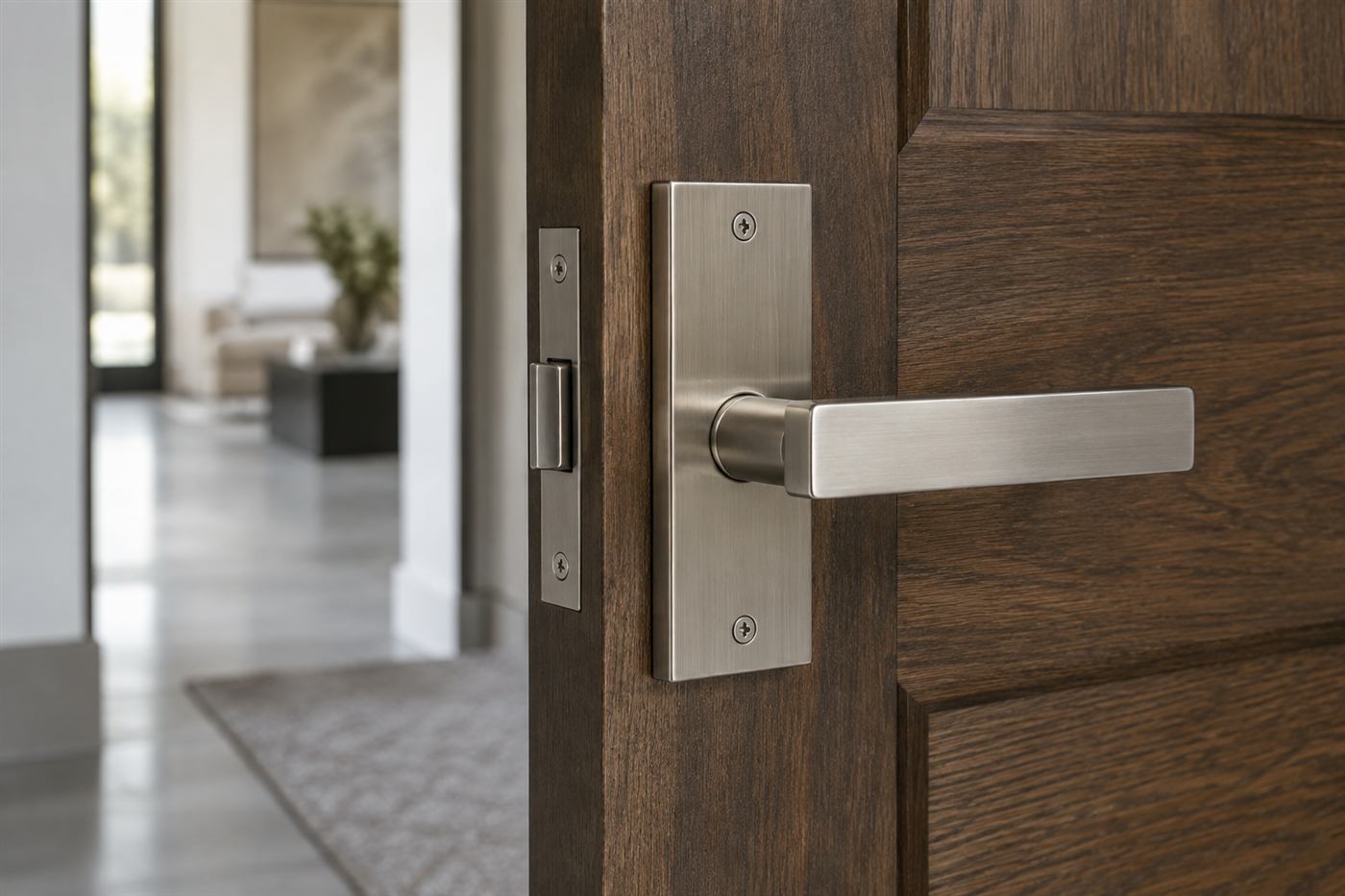
Every door lock has two halves that must meet. On the door is the latch or bolt, the part that slides out. On the frame is the strike plate, a metal plate with a hole or slot to receive it. If the bolt and the hole do not line up properly, the bolt scrapes, catches or jams. The lock itself may be perfect.
Wear and movement create misalignment. Over years of use, a door settles on its hinges. A latch that once entered the strike hole cleanly now hits the edge. Paint buildup on the strike or the latch can add resistance. A strike plate that was installed slightly off, or that has loosened, produces the same effect.
The signs are scuff marks on the strike plate where the latch drags, a latch that needs a push to catch, or a bolt that jams only when the door is fully closed. A technician can often fix this with a small file adjustment of the strike opening, a repositioned strike plate or a shim behind the hinge. These are modest, targeted repairs, and they work far better than replacing a lock that was never at fault. See door will not latch properly for a deeper look.
Door sag, hinges and settled frames
Doors are heavy, and hinges carry that weight every day. Hinge screws loosen, particularly the top hinge, which bears most of the load. As the top hinge loosens, the door tilts forward at the top and drops at the latch side. The result is a door that rubs at the lower corner and a bolt that no longer meets its strike.
Frames move as well. Wood frames shrink and swell with humidity, and in an older concrete block house the framing may settle. A frame that has moved even a little changes the geometry the lock relies on. This is why a lock that worked flawlessly for years can suddenly begin to jam without anyone touching it.
A technician checks hinge tightness first. Tightening loose screws, replacing short ones with longer ones that reach the framing and checking that the door hangs evenly are often enough. If the door is badly warped or the frame has shifted significantly, a larger repair is needed. In that case, an on-site visit helps work out what is involved. See door frame security explained for how doors and frames work together.
Lubrication myths
The most common reaction to a jammed lock is to spray something into it. Household lubricants, heavy oils and general-purpose sprays are the usual choices. They seem to help at first, because the lock moves more easily for a short time. Then the problem returns, often worse.
The reason is that oils and wet sprays attract and hold dust, sand and salt. Inside a cylinder, that mixture becomes a sticky paste that grips the pins and the springs. The lock may feel better for a day, then jam harder as the paste thickens. In coastal South Florida, where fine sand and salt are constant, this happens faster than in other places.
Lubrication also cannot fix mechanical misalignment. If the cause is a strike plate that does not line up with the bolt, spraying the lock does nothing. If the cause is a worn key, spraying does nothing. A clean, dry lubricant made for locks has a place in maintenance, after the cylinder is cleaned, but it is a supporting step, not a cure. A technician diagnoses first and lubricates only when it will help. Avoid pouring liquids into your lock.
Worn parts and aging hardware
Locks have moving parts, and moving parts wear. Springs weaken, pins round off, bolts and latches lose their smooth edges, and the screws that hold everything together loosen. A lock that has been in service for many years may simply be tired. The sticking you feel is friction between worn surfaces.
Builder-grade hardware wears faster. Locks installed in new homes and rental properties are often a basic grade that meets minimum requirements. They work well for years but are not built for decades of heavy use. A door used by many people or opened many times a day, such as a main entrance or a shared door, will wear its lock faster.
When the whole mechanism is tired, repair has diminishing returns. A technician may recommend replacing the lock with a better grade, which will operate more smoothly and last longer. Our guides on lock grades and choosing a deadbolt explain how to compare options without needing technical knowledge.
Weather, humidity and heat in South Florida
Weather turns a borderline problem into a frequent one. A door that is just barely misaligned in January may jam daily in August, when humidity swells the wood. A lock in direct afternoon sun may jam during the hottest hours, when metal parts expand. A lock exposed to storms may jam after the wet weather as water works into the cylinder.
Notice the pattern. A lock that jams at the same time of day, in the same weather or after the same event is easier to diagnose. Keep a few notes if you can: when it jammed, what the weather was, which side of the house the door faces. That information helps a technician decide whether the cause is the door, the lock or both.
Salt air adds corrosion to the list. Near the coast, even a lock that looks fine may be corroding inside. See caring for locks in salt air and lock sticks in hot weather for ways to reduce the problem.
Safe checks you can try
There are a few things you can safely check before calling. Look at the strike plate for scuff marks that show where the latch rubs. Look at the gap around the door: it should be fairly even on the top and the latch side. A gap that is wider at the top corner on the latch side suggests the door has dropped.
Try the key with the door open. If the lock operates smoothly with the door open but sticks when closed, the cause is alignment. Try lifting the door slightly by the handle while closing it, and see if the latch catches more cleanly.
Tighten any visible loose screws on the hinges, using the correct screwdriver and gentle force. Do not overtighten, which can strip the holes. If a hinge screw spins without tightening, the hole is stripped, and a technician can fix that properly.
- Look for scuff marks on the strike plate
- Check the door gap for evenness at the top and sides
- Try the key with the door open, then closed
- Gently tighten loose hinge screws without forcing them
- Note when and in what weather the lock jams
- Stop and call if anything feels gritty, bent or broken
What a technician checks
A technician approaches a repeated jam methodically. They start by listening to your description: when it jams, how, and what you have tried. They then watch the door close and open, noting any rubbing, any sag and any resistance. They test the lock with the door open to separate lock problems from door problems.
Next they inspect the strike plate, the latch and the bolt. They look for wear marks, burrs and misalignment. They check hinge screws and the frame. If the cylinder is suspect, they remove it and test it on the bench, comparing it with a known good one.
Only after that do they recommend a repair. It might be a minor adjustment, a new strike plate, a cylinder replacement or a full lock replacement. In all cases, the technician explains what they found. A repair that fixes the cause will hold. A repair that treats only the symptom will return. See lock repair for a look at what is involved.
Repair, adjust or replace
Three kinds of outcome are common. Adjustment is the lightest: filing a strike opening, repositioning a plate, tightening hinges or shimming. It is often enough when the lock is sound and the door has simply moved. Repair replaces a worn part inside the lock, such as a cylinder or a latch assembly, and keeps the rest.
Replacement is the heaviest, and it is not always the best. It makes sense when the lock is corroded, when parts are no longer available or when the lock is a poor match for the door. It is also an opportunity to improve security by choosing a better grade of hardware.
Be careful of anyone who recommends replacement without testing. A lock that jams because of a misaligned strike will jam again after replacement. Ask the technician what they found and why they recommend what they do. Our rekey versus replace guide explains how to think about the choice.
Jamming at businesses and rentals
Shared and commercial doors jam more often because they are used more. A shop door that opens hundreds of times a day wears its latch and closer quickly. A rental that has changed hands several times may have a lock that has been adjusted, patched and re-fitted. A door shared by many residents, such as a building entrance, takes a beating that a private door never sees.
For these doors, preventive attention pays off. A periodic inspection by a technician can catch a worn latch, a loose strike or a sagging door before it becomes a failure at a bad moment. For managers, reports from tenants about doors that stick are worth acting on promptly. See commercial door closer service and property manager lock service.
If a business door will not secure at closing time, treat it as urgent. Do not leave the premises with a door that is merely pushed shut. Call, explain that the door will not latch or lock, and the dispatcher will tell you how to proceed.
Sliding doors, gates and other locks that jam
Not every jam happens at the front door. Sliding glass doors jam when the track fills with sand and debris, when the rollers wear and when the latch hook no longer lines up with its keeper. Cleaning the track with a vacuum and a soft brush often helps, and a technician can adjust the rollers and the latch. The sliding glass door locks page explains the options.
Gate latches jam for similar reasons: the gate sags on its hinges, the post leans, or the latch collects rust. A gate that has dropped even slightly may no longer meet its latch, and people compensate by lifting it every time. That habit wears the hinges further. A gate repair often means adjusting the hinges and the latch together. See gate latch will not catch for more.
Garage-entry and side doors are overlooked until they stick. They are often secured with the same builder-grade hardware as the front door but get less attention. A door that jams only occasionally, and that you rarely use, will usually fail at the moment you need it. Treat any repeated jam on any door as a signal to have the hardware looked at.
Quotes, charges and calling
Quotes are given only by phone. A service call charge applies for dispatching a technician and is explained before anyone is sent. A simple adjustment or cylinder swap can often be discussed with reasonable certainty over the phone. A door with serious sag, a damaged frame or hardware that is unusual may need an on-site visit before a firm quote can be given.
When you call, describe the lock and door, say when the jam happens and what you have tried. Have identification ready. For a rental or a business, know who authorizes the work. We do not promise arrival times, but the dispatcher will tell you honestly what to expect.
You may verify any locksmith's credentials, and you should ask about charges before work begins. When the problem keeps coming back, a call is better than another spray. Call and describe what is happening, and the dispatcher will explain the next step.
Questions people ask
Why does my lock jam even after I spray it?
Spraying treats friction, but many jams come from misalignment between the bolt and the strike plate, a sagging door or a worn key. Wet sprays also attract dust and salt and form a paste that makes jamming worse. A technician diagnoses the cause first and uses a clean, dry lubricant only where it helps.
How can I tell if the door or the lock is the problem?
Test the key with the door open. If the lock works smoothly open but sticks closed, the door or strike alignment is likely the cause. If it is rough even open, the key or cylinder is at fault. Scuff marks on the strike plate also point to misalignment.
Does humid weather really cause locks to jam?
Yes, indirectly. Humidity swells wood and composite doors and frames, which shifts the bolt against the strike. Heat expands metal doors, and salt air corrodes internal parts. A lock that jams at certain times of day or in certain weather is often reacting to the door moving, not failing.
Will tightening hinge screws help?
Often. Loose hinge screws let the door drop, which misaligns the bolt and strike. Tighten them gently with the right screwdriver. If a screw spins without gripping, the hole is stripped, and a technician can fix it with longer screws or a repair that reaches the frame behind.
Is a jammed lock at my business urgent?
If the door will not secure, yes. Do not leave the premises with a door that is only pushed shut. Call and explain that the door will not latch or lock. The dispatcher will explain how the visit works, and a technician can adjust or repair the hardware so the door secures properly.
Do you list prices on this page?
No. Quotes are given only by phone because the right answer depends on the lock, the door and the situation. A service call charge applies for dispatching a technician and is explained before anyone is sent. Complicated jobs need an on-site visit so that the quote matches the actual work.
Describe the situation by phone and we will tell you what the job involves. Quotes are given by phone. Jobs that cannot be quoted without seeing them need a technician on site, and the service call charge is explained on the phone before anyone is dispatched.
(954) 906-9567