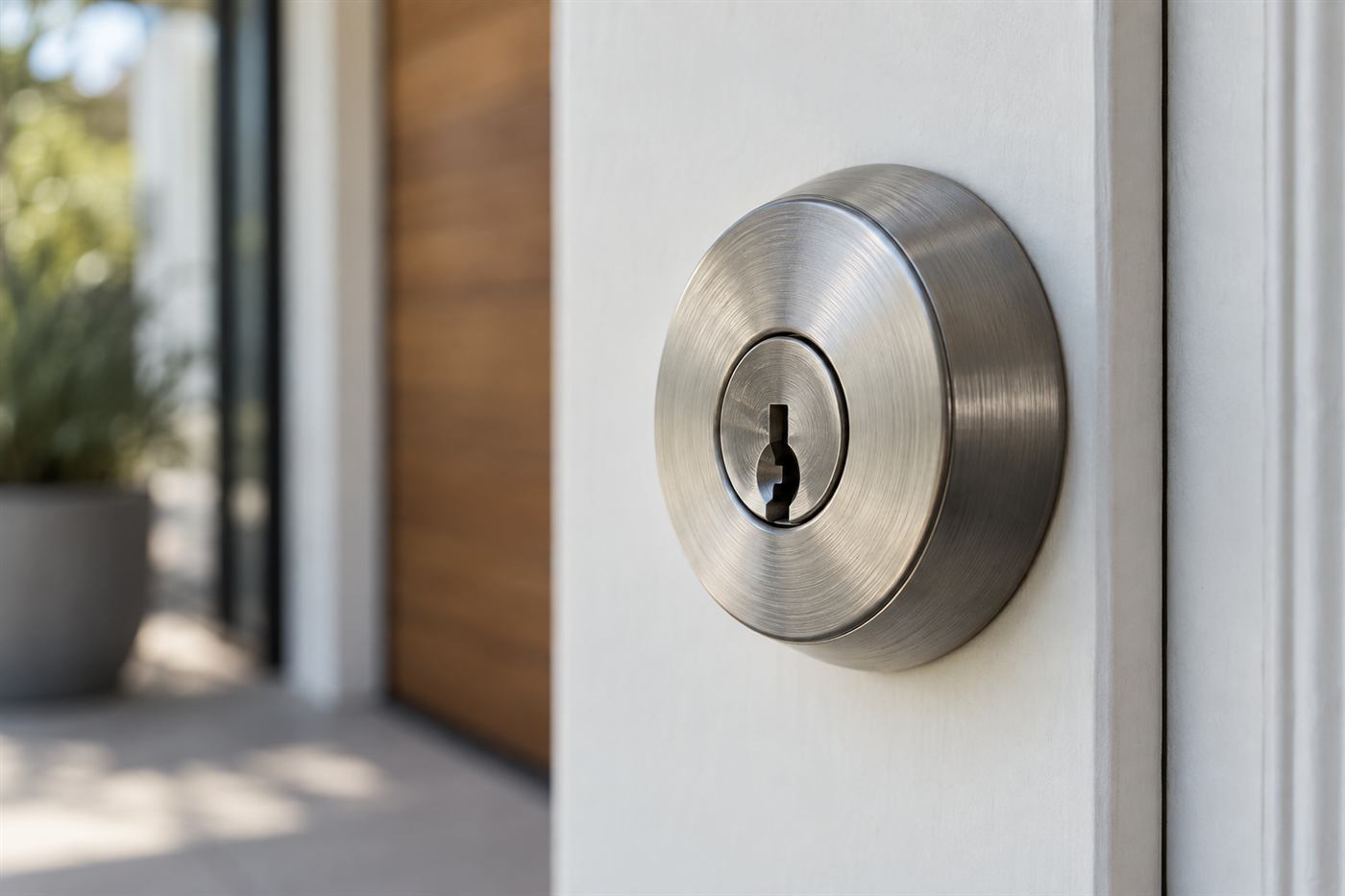
Some locks aren't worth rekeying, worn out, damaged in a break-in attempt, or under-specified for the door they're on. Replacement means new hardware chosen for the actual door and frame, not just whatever matches the old faceplate.
Choose replacement when the hardware itself has failed, when a forced entry has damaged the strike or frame, or when the current lock was never rated for the door it's on.
Serving Boca Raton and south Palm Beach and north Broward County. Quotes are given by phone before dispatch. Call (954) 906-9567.
What the job actually involves
Assess the opening
Door, frame, strike and hinges, not just the cylinder that's failing.
Specify honestly
The right grade for the door, not the most expensive box on the shelf.
Fit it correctly
Mortised properly, reinforced where the frame needs it, aligned so it closes clean.
Test and hand over
Keys tested, hardware demonstrated, before we call it done.
How to tell a lock has reached the end
Locks rarely fail all at once. They wear gradually, and most people adapt without noticing. You start lifting the door slightly to get the deadbolt to throw. You learn to pull the key back a millimeter before it will turn. The knob develops a little play and then a lot. Each of those habits is a symptom of worn parts, and each one means the lock is doing less than it should when someone tries to force it.
Physical damage is the clearer signal. Pry marks on the frame near the strike, a bent latch, a cylinder that spins freely in its housing, or scratches around the keyway that look like someone worked at it with a tool all point to an attempted entry. Even if the attempt failed, the lock has absorbed force it was never meant to absorb twice. After any break in or attempted break in, replacement of the affected hardware is almost always the right call.
Corrosion is the third category, and in coastal Palm Beach and Broward County it is common. A lock that has been exposed to salt air for years can look fine on the outside while the internal springs and cams have rusted. When a latch stops springing back on its own, or the thumb turn on the inside feels stiff even though the key side is smooth, internal corrosion is a likely cause. Cleaning helps for a while, but once internal parts are pitted, new hardware is the lasting fix.
What the hardware grades actually mean
Residential and commercial locks are commonly tested to the ANSI and BHMA standards, which sort hardware into three grades. Grade 3 is the lightest, intended for basic residential use. Grade 2 is a heavier residential and light commercial grade. Grade 1 is the heaviest, built for commercial doors that see constant use and higher levels of abuse. The tests cover how many cycles the lock survives, how much force the bolt and latch withstand, and how the lock holds up to specific attacks.
Grade alone does not tell the whole story, but it is a useful floor. A big box store lockset with no stated grade, or one rated Grade 3, is often what builders install on new construction to keep costs down. On a front door in a busy household, or on a door that faces a street or a canal, a step up to Grade 2 or Grade 1 hardware usually makes sense. On a bedroom or closet door, a lighter grade is fine. We match the grade to the door and how it is used rather than recommending the heaviest option everywhere.
Some manufacturers also publish ratings for finish durability, which matters in salt air. A plated brass finish may start to blister within a couple of seasons near the ocean, while certain coated or stainless finishes hold up far longer. If you live near the water, ask about finish as well as grade. A lock that works perfectly but looks corroded on the outside tends to get replaced early anyway.
Why the strike and frame matter as much as the lock
When a door is kicked in, the lock usually survives. What fails is the wood around the strike plate. Most builder installations use short screws, often three quarters of an inch long, that only reach the thin door stop trim instead of the framing behind it. A solid deadbolt anchored with short screws is only as strong as that trim. That is why we treat the strike as part of every replacement, not as an optional upgrade.
A reinforced strike plate with long screws that reach the wall stud changes the picture. Some reinforcement plates wrap around the jamb or run the full height of the latch area to spread the load. On doors that have already been forced, the jamb may be split, and in that case the repair can involve reinforcing or replacing part of the frame before a new lock goes in. We will show you what we find and explain what it needs.
Hinges are the other half of the opening. On an outswinging door, which is common in south Florida because outswing doors resist wind pressure better, the hinge pins are on the outside. Security hinges or hinge pins that cannot be removed with the door closed keep someone from simply lifting the door out of its frame. We check hinges during every replacement so the new lock is not the strongest part of an otherwise weak opening.
Matching hardware to south Florida doors
Front doors in this area come in many forms. Older homes in east Boca and Delray Beach may have solid wood doors with traditional bored locksets. Newer construction often uses fiberglass or steel doors with impact rated glass inserts. Many coastal condos have metal doors in metal frames. Each of these takes hardware differently, and each has its own set of hardware that fits properly. A lock designed for a wooden door can be a poor fit in a hollow metal frame without the right strike and spacing.
Impact doors deserve particular care. These doors are tested as complete assemblies, and the hardware is often part of what was tested. Swapping in a random lockset can affect how the door performs under wind pressure. When we replace hardware on an impact door, we look for the manufacturer's hardware requirements or match the original hardware type closely, and we avoid cutting or enlarging the door prep unless there is no other way.
French doors and double doors are another common case in Boca Raton homes with courtyards and pool decks. The inactive leaf is held by flush bolts at the top and bottom, and the whole pair is only as strong as those bolts. A new deadbolt on the active leaf does little if the inactive leaf can be pushed open because its bolts do not engage properly. We check both leaves and replace or adjust flush bolts as part of the job when needed.
The door people forget to secure
Sliding glass doors lead to pool decks, patios and lanais in a huge share of homes and condos here. Their factory latches are often a simple hook that engages a keeper on the frame, and over time the hook wears, the rollers wear, and the door sits lower in its track so the hook no longer catches fully. A slider that can be lifted or rattled open is a common entry point in areas where the patio is out of view from the street.
Replacing a slider latch is usually straightforward once we know the manufacturer and the handle spacing. We can also add secondary locks that pin the sliding panel to the frame, and we can check whether the panel can be lifted out of its track. On older aluminum sliders near the coast, corrosion around the latch area can make installation tricky, so we look at the frame condition before recommending hardware.
Knobs, levers, handlesets and deadbolts
Style matters for daily use as well as appearance. Levers are easier to operate with full hands, wet hands after the pool, or for anyone with arthritis, which is a real consideration for many households in this area. Knobs are simpler and can be harder to force with a tool, but they are awkward for some people. Handlesets with a thumb latch give a front door a more substantial look and pair well with a separate deadbolt above.
The deadbolt is what actually secures the door. Single cylinder deadbolts have a key outside and a thumb turn inside. Double cylinder deadbolts need a key on both sides, which some people prefer next to glass, but they create a real problem in a fire if the inside key is not immediately at hand. Fire and building rules restrict double cylinder locks on certain exit doors, so check before choosing one. We usually recommend a single cylinder deadbolt with reinforced glass or a well placed thumb turn guard instead.
Mortise locks, where the lock body sits in a pocket cut into the door edge, are found on many older and higher end homes and on commercial doors. They combine the latch and deadbolt in one case and tend to be very durable. Replacing a mortise lock usually means finding a body that fits the existing pocket, which we can often do without modifying the door. If the original is no longer made, we look for a compatible body before suggesting any change to the door itself.
Upgrading to electronic hardware
Many replacement calls now involve a move to a keypad or smart lock. These can be a good fit, especially for households with kids who lose keys or owners who let service providers in while away. The trade offs are real, though. Batteries need replacing, and in a humid, salty climate the electronics and battery contacts face more stress than they would indoors. Choose a model with a weather rating suitable for exposed doors, and put it on a door with some cover if possible.
Every smart lock still needs to be installed on a door and frame that can hold it. The same strike reinforcement and alignment rules apply. A misaligned door that makes the bolt drag will drain batteries quickly and can cause the motor to fail to lock, which is worse than a manual lock that simply needs a push. We align the door and strike first so the electronic lock throws its bolt cleanly every time.
Replacing hardware after forced entry
After a break in, the first priority is making the door secure again the same day. That may mean a temporary fix if the frame is badly split, followed by a proper repair once materials are in hand. We will tell you which parts of the job are temporary and which are permanent so you know exactly where things stand. If the police are involved, take photos of the damage before we start, because once the frame is repaired the evidence of how entry was made is gone.
If you plan to file a claim with your home policy, ask your carrier what documentation they want before repairs begin. Many want photos and an itemized record of the work. We can provide a clear description of what was damaged and what was replaced so you have something to submit. We do not tell you what your policy covers, because that is between you and your carrier.
A break in is also a good moment to look at every other entry. Intruders often try several doors before finding a weak one. If the side garage door or the back slider showed marks as well, it is worth addressing those at the same visit rather than waiting for a second attempt.
Beyond the front door
Pool gates, side yard gates, sheds and detached garages all take locks, and all of them sit fully exposed to sun and rain. Gate latches on pool enclosures also serve a safety role, because a self closing, self latching gate keeps small children away from water. If a pool gate latch has stopped catching on its own, replacing it is a safety repair as much as a security one.
For outdoor hardware, material matters more than almost anything. Stainless steel and marine grade finishes hold up far better in this climate than zinc or plated steel. A low-grade gate latch may last only a season or two before it seizes. We will recommend hardware that suits the exposure so you are not replacing it every year.
Replacement for offices and storefronts
Commercial doors take far more cycles than residential ones. A busy medical office or retail shop may see a door open hundreds of times a day. Hardware that is fine for a home will wear out quickly under that use. Commercial replacements usually call for Grade 1 cylindrical or mortise locks, heavy duty closers, and exit devices on doors that must allow quick egress.
Storefronts with aluminum and glass doors typically use narrow stile hardware, with a lock body that fits inside a thin frame. These have their own parts and their own failure points, especially the long throw hook bolts that engage the opposite door or the header. When a storefront lock starts to fail, we source matching narrow stile hardware rather than trying to adapt something that was not designed for the frame.
If you rent your commercial space, check your lease before replacing locks. Many landlords require notice and a copy of the key, and some require specific hardware to stay compatible with the building's master system. We can work with building management directly so the replacement fits their requirements.
Locks and storm preparation
Storm preparation in this area usually focuses on shutters and impact glass, but door hardware plays a part too. A door that does not latch firmly can flex under wind pressure, and a loose latch lets wind driven rain work past the weatherstripping. Before the season starts, check that every exterior door closes and latches without being pushed, that the deadbolt throws its full length, and that the inactive leaf of any double door is held tight at the top and bottom.
If a lock is already marginal, replace it before the season rather than after a storm, when every tradesperson in the county is booked. After a storm, look at locks on doors that took direct exposure. Water can sit inside a cylinder for days, and a lock that worked the morning after can seize a few weeks later as corrosion sets in. A stiff key or a latch that no longer springs back is worth a call before it fails completely and leaves you unable to lock the door at all.
Owners who leave for the summer should make sure the hardware on a shuttered house works before they go. Nobody wants a property watch service reporting that the only door they can reach will not lock after an inspection visit in August.
What to have ready
Measure what you can before calling. The backset, which is the distance from the edge of the door to the center of the lock hole, is usually either two and three eighths or two and three quarters inches. The door thickness is usually about one and three quarters inches for exterior doors. If you can tell us those numbers and take a photo of the existing hardware and the edge of the door, we can often bring the right hardware on the first trip.
Decide on finish ahead of time if you care about matching. Satin nickel, oil rubbed bronze, matte black and polished brass are all common, and matching the existing hinges and other hardware in the house makes a difference visually. Think about keying too. If you want the new lock on the same key as the rest of the house, keep a working key handy so we can match it. As always, have ID and proof that you own or control the property, because we confirm that before replacing any lock.
Need lock replacement done right?
See all services · See areas served
Describe the situation by phone and we will tell you what the job involves. Quotes are given by phone. Jobs that cannot be quoted without seeing them need a technician on site, and the service call charge is explained on the phone before anyone is dispatched.
(954) 906-9567